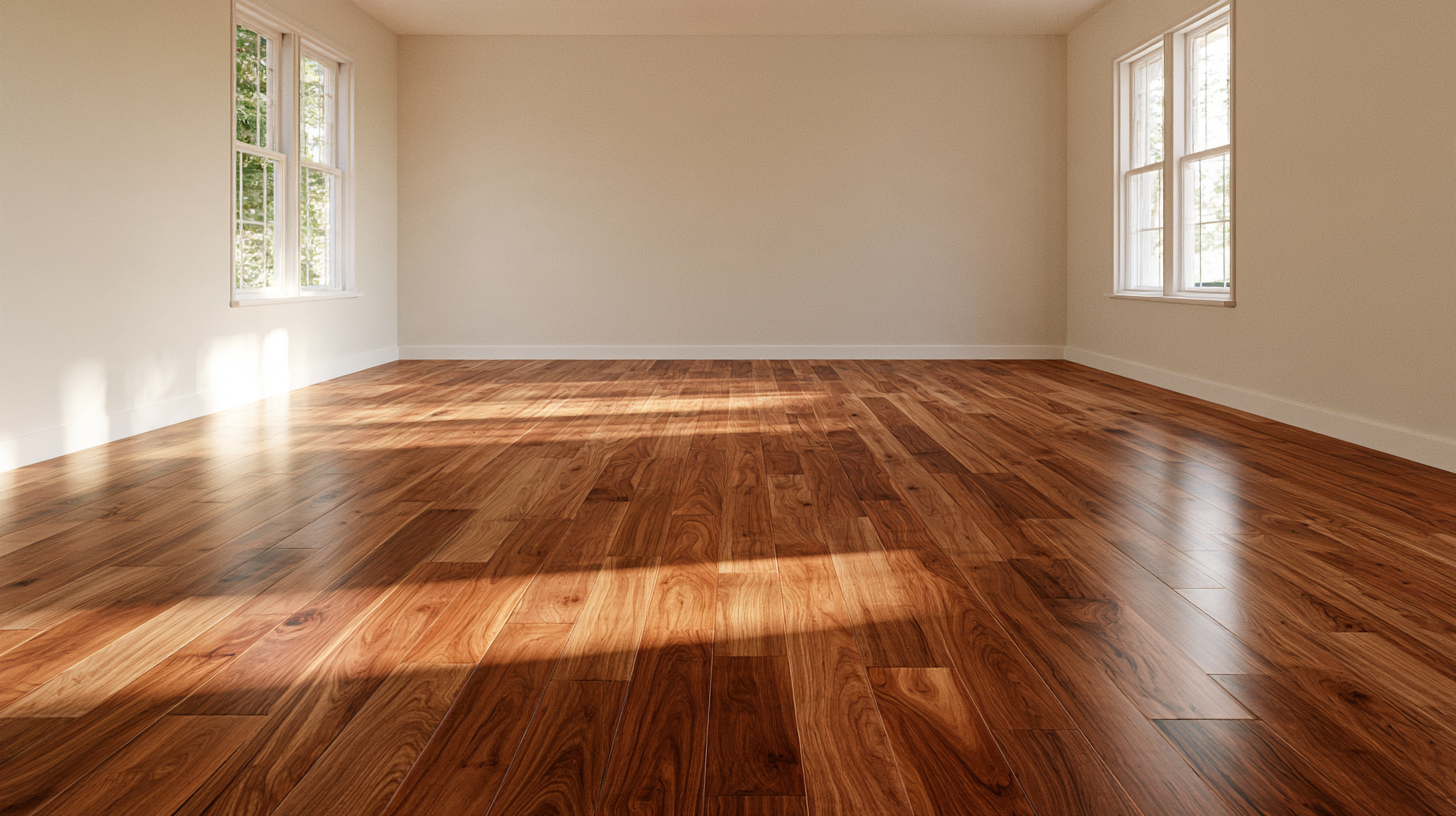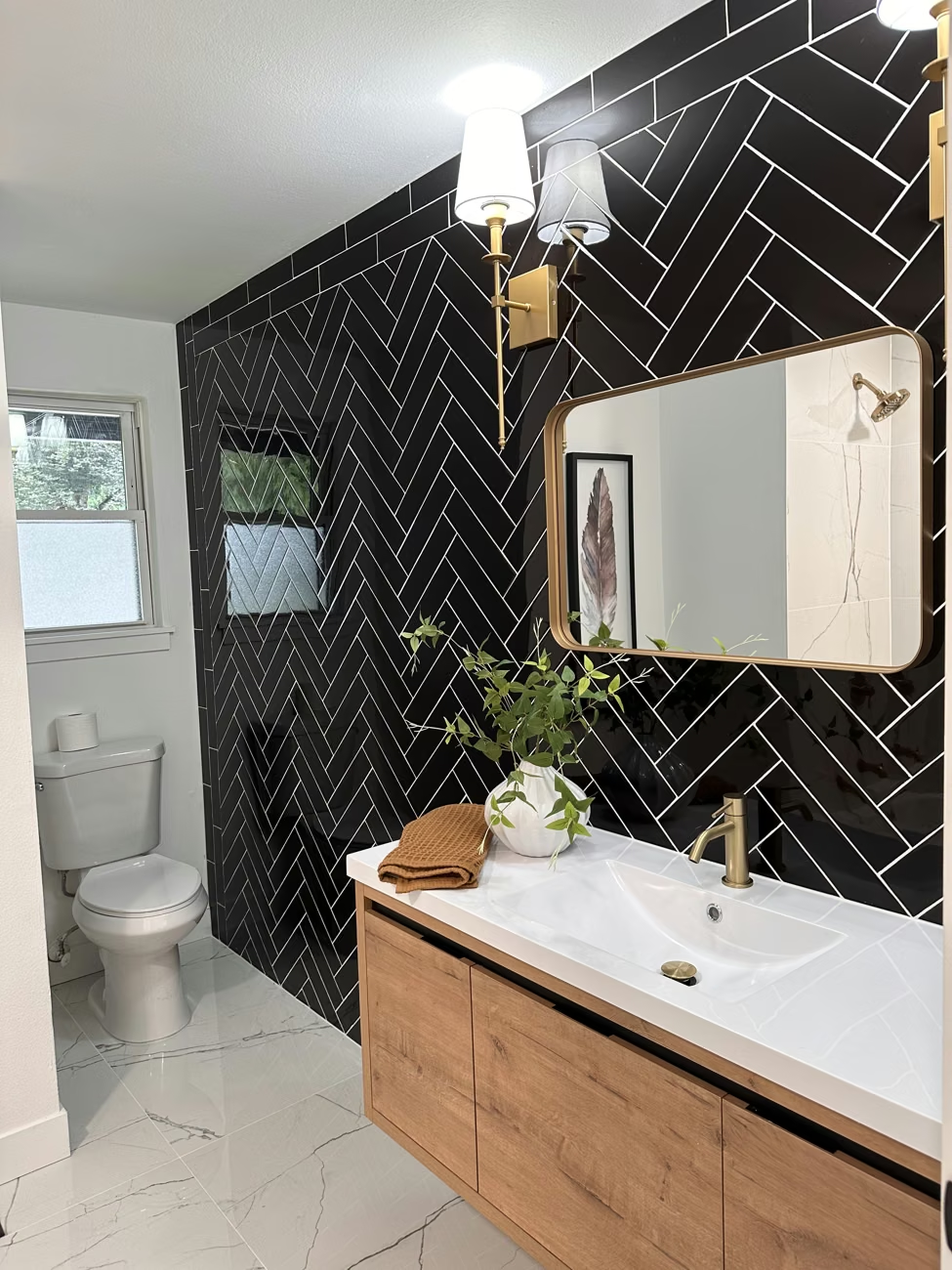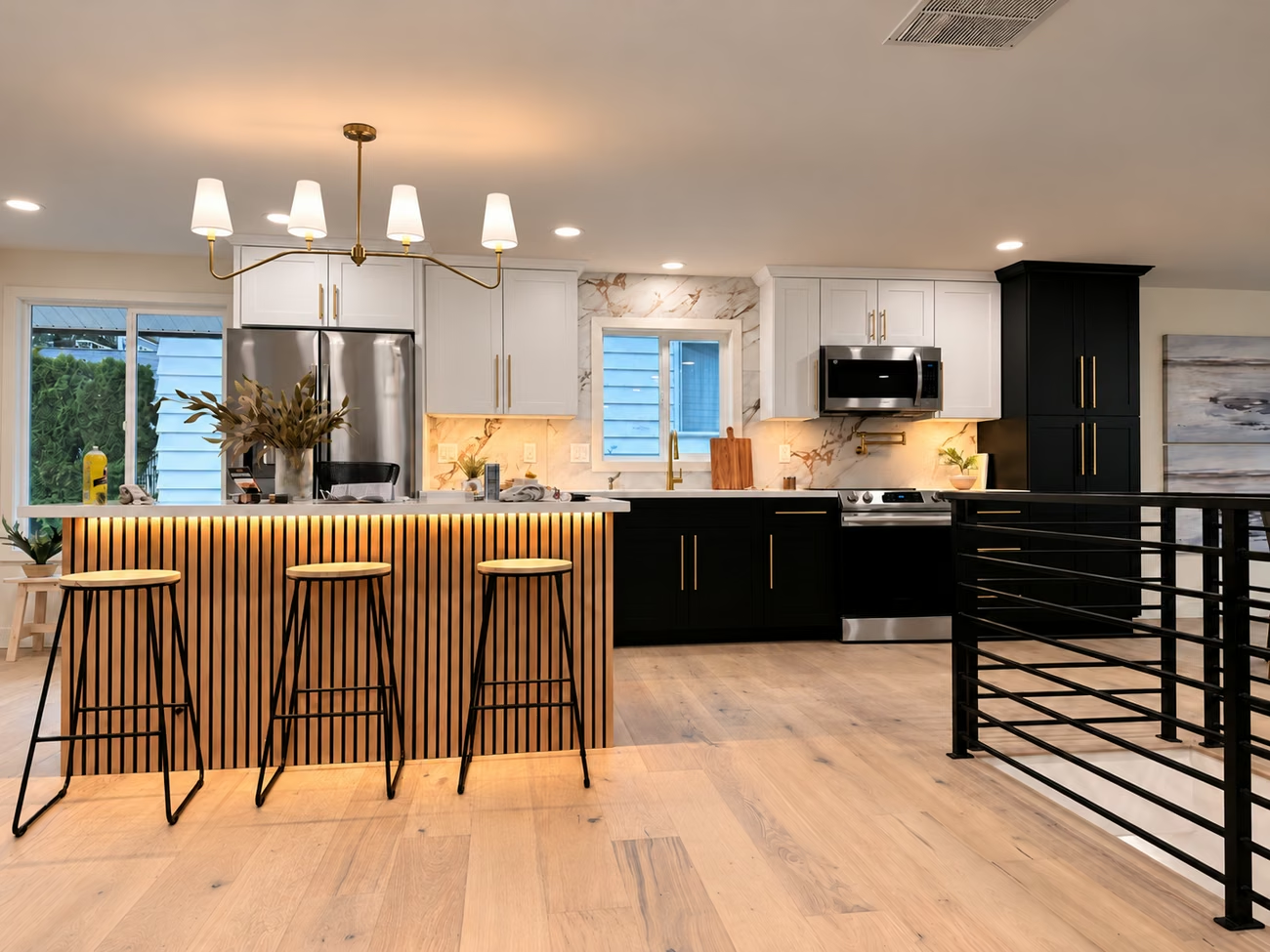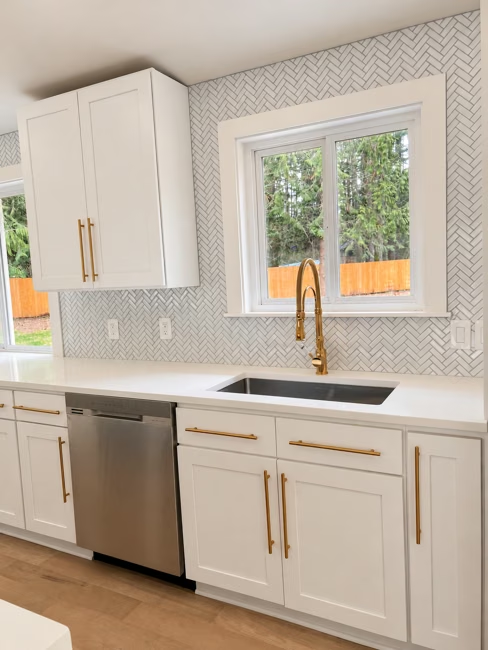


Choose a stain labeled for interior hardwood floors, compatible with your wood species and with the protective finish going over it. No formula or color is universally best, so the real decision point is a sample applied to your sanded floor and topcoated with the finish you intend to use. Different woods absorb color differently, and one stain can look like two products on two species.
This guide is for the homeowner about to refinish or install a floor who wants the color right the first time. You'll get a decision order instead of a swatch list. If you came here to remove a dark pet or water spot, skip to the last FAQ. For application steps, see our step-by-step guide to staining hardwood floors.
Stain vs. Finish: What Each One Actually Does
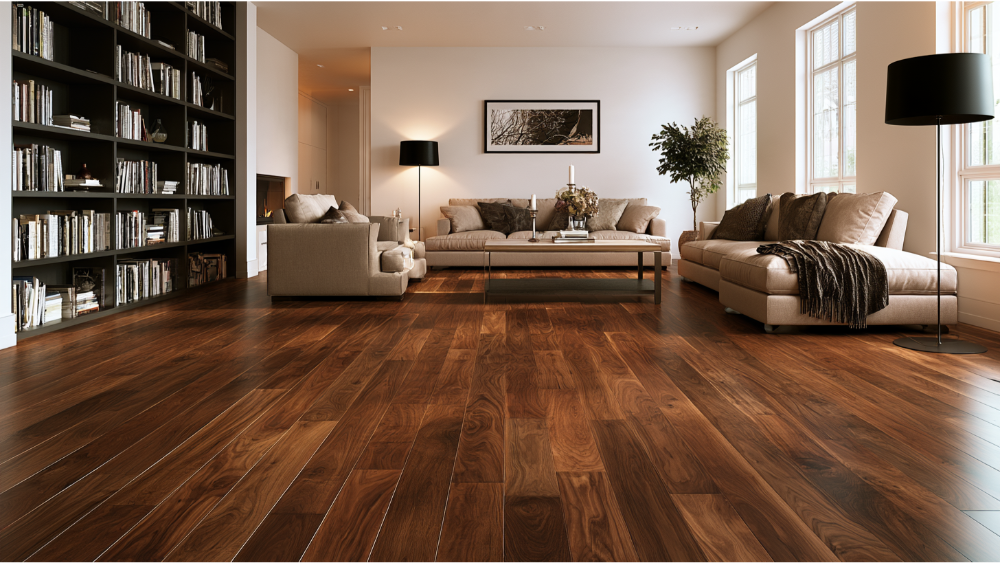
Stain changes color. The finish is the wear surface and the protection. The USDA Forest Products Laboratory describes the traditional sequence as sanding, optional filling, staining for color, then finishing, and that order matters because the topcoat carries the durability.
A "natural" floor means no stain under a clear finish, which enhances the species' own tone instead of covering it. Some products color and seal in one step, but a stained floor still needs the coat the manufacturer specifies for that system.
Can Your Wood Floors Be Sanded and Stained?
Penetrating stain has to penetrate bare wood. Existing polyurethane, wax, or factory finish blocks absorption, which is why the NWFA defines refinishing as sanding a previously finished floor down to bare wood. A screen-and-recoat refreshes a compatible finish but won't change color. If you purchased the home and don't know what's on the floor, identify that first.
Engineered flooring has a hard limit: the real-wood wear layer. NWFA Refinishable Program thresholds are 3.2 mm for unfinished engineered flooring and 2.5 mm for factory-finished smooth flooring, measured at the lowest point on sculpted or distressed boards. In general, flooring with less than roughly 2.5 mm (about 3/32 inch) left should not be sanded, and sanding history and fastener depth require someone to look at the floor in person.
Oil Based Stains vs. Water Based Stain: Which Hardwood Floor Stain Should You Pick?

The carrier alone doesn't decide durability or the look; the complete system does. Gel stain is where homeowners run into trouble, since it colors on top of the wood rather than in it, and at least one current gel stain is explicitly not recommended for floors. A deck stain is not a floor stain, so research the current label and technical data sheet before anything goes down.
How Wood Species Changes Your Stain Color: Red Oak, Maple, and Beyond
Maple deserves its own warning. The Maple Flooring Manufacturers Association notes that northern hard maple's tight cellular structure and variable grain can cause stain to absorb minimally or unevenly, producing a mottled result, and recommends consulting a qualified flooring professional or the stain manufacturer and reviewing completed maple projects first. Wood conditioner helps sometimes; it is not a guarantee. Water popping can even out absorption on certain woods and deeper colors, but it has to be done consistently to achieve an even result.
Species narrows the field, and the difference between two species under one stain can be dramatic. It never replaces a sample.
How to Pick a Stain Color Family That Works in Your Space
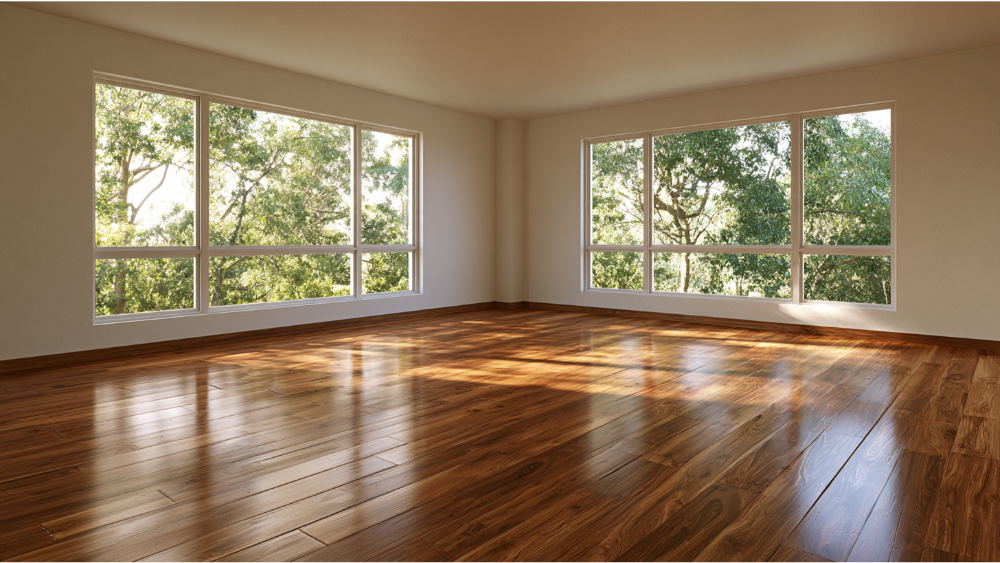
- Natural or near-clear: shows the species honestly and ages gracefully. Easiest to repair later.
- Light neutral: opens up rooms with limited daylight, though dust and pet hair read clearly.
- Warm medium brown: forgiving on scratches, easy to maintain, pairs with most cabinet tones.
- Cool or muted brown: can fight red oak's pink undertone. Sample this one hard.
- Dark brown to near-black: beautiful grain contrast and the least forgiving. Footprints and uneven sanding show.
- White or gray: highly species-dependent and the hardest family to match later.
Room light and wall paint shift every one of these, so check your choice against cabinets, doors, trim, and any adjoining floor. Blending two stains for a custom color is common when matching an existing floor. A quick search turns up lists calling certain colors "most popular," and we've never found measured data behind them. Pinterest boards and blog posts are useful for ideas, not for decisions, because an amazing color on someone else's floor can read completely differently on yours.
The Best Way to Test: Our On-Floor Sample Process
Nothing permanent gets decided until you've seen it on your own floor. Good samples reproduce six things:
- Your actual species and boards
- A clean sanding sequence through the grits, so the grain opens without burnishing
- The final stain or custom blend
- The sealer, if the system uses one
- The intended topcoat
- The intended sheen, since a satin finish reads softer than gloss
Let it dry completely before you judge it, then look in daylight and again under evening lighting, next to the cabinets and trim it has to live with. A printed chart can't reproduce your wood, your light, or your finish chemistry. Once you approve a color, we document the formula and the details of the application method so later repairs match.
Stain and Topcoat Compatibility, Dry Times, and Living in Your Home

Oil-modified stain under a compatible waterborne finish is a well-proven pairing. We believe quality materials are essential for lasting results, and mixing unrelated products without verifying the manufacturer's system invites adhesion failures and color surprises.
Dry times are product-specific, depending on color, temperature, and humidity. One professional oil-modified floor stain publishes roughly 2 hours for most wood tones and 12 to 18 hours for several dark colors, with a 48-hour window to apply the compatible sealer, under ideal conditions of 60 to 80°F and 35 to 75% relative humidity. High humidity and low temperature affect all of it, so treat the current technical data sheet as the authority.
On indoor air, the EPA cautions that a "low VOC" label doesn't by itself make a product safer indoors, since individual chemicals differ in toxicity. We suggest ventilating during and after, and planning around sensitive occupants and pets.
Common Hardwood Floor Stain Mistakes (and One Real Safety Warning)
- Choosing a color from an online image
- Using a product not approved for floors
- Trying to stain through an existing finish
- Skipping the topcoat on the sample
- Forcing maple to take a uniform dark color
- Over-applying, or rushing the wiping step
- Topcoating before the stain is fully dry
- Ignoring the engineered wear layer
Safety: oil- and solvent-wet rags can self-heat as they oxidize and ignite when left in a pile. The U.S. Fire Administration advises placing them in a tightly sealed metal container for disposal.
When Professional Refinishing Is the Safer Choice
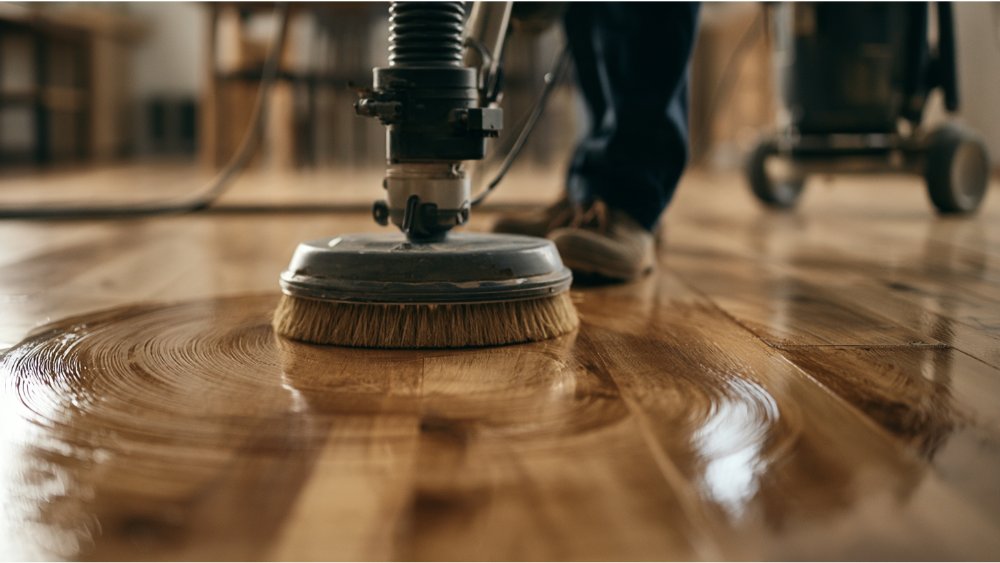
Call someone in for engineered or previously sanded floors, maple and other difficult species, custom color matching, dark colors that punish uneven sanding, and occupied homes with air-quality concerns.
Owner-led means the people who sample your floor are the people who finish it. We back our remodeling work with a two-year warranty and keep you updated as the work moves.