.avif)

What Makes Engineered Hardwood Different From Solid Hardwood?
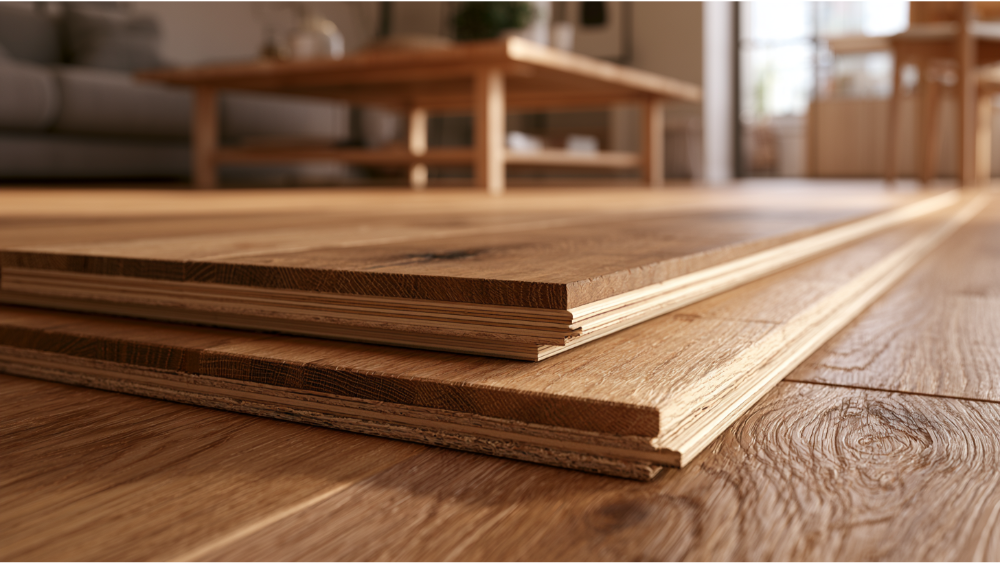
Engineered hardwood is a thin layer of real wood (the veneer, or wear layer) bonded over a core of plywood or high-density fiberboard. The top layer is often oak, which sands and stains predictably. Solid hardwood is a single piece of wood all the way through. That layered build makes engineered floors more stable and more durable against moisture swings, which matters in our climate. The trade-off: you can only sand the veneer on top. The core underneath cannot be refinished. Understanding that difference is the first step in any smart plan.
How Thick Does the Wear Layer Need to Be?
This is where the decision lives. Many web guides say 2 mm is enough, but the National Wood Flooring Association's refinishable benchmark is closer to 2.5 mm (3/32 inch) for factory-finished floors and 3.2 mm for unfinished products. We lean toward that more conservative and reliable number, because sanding removes wood you can't put back.
We won't promise an exact number of refinishes. Condition, texture, and prior sanding all factor into the durability of engineered hardwood floors over time.
How Seattle Homeowners Can Check Their Floors
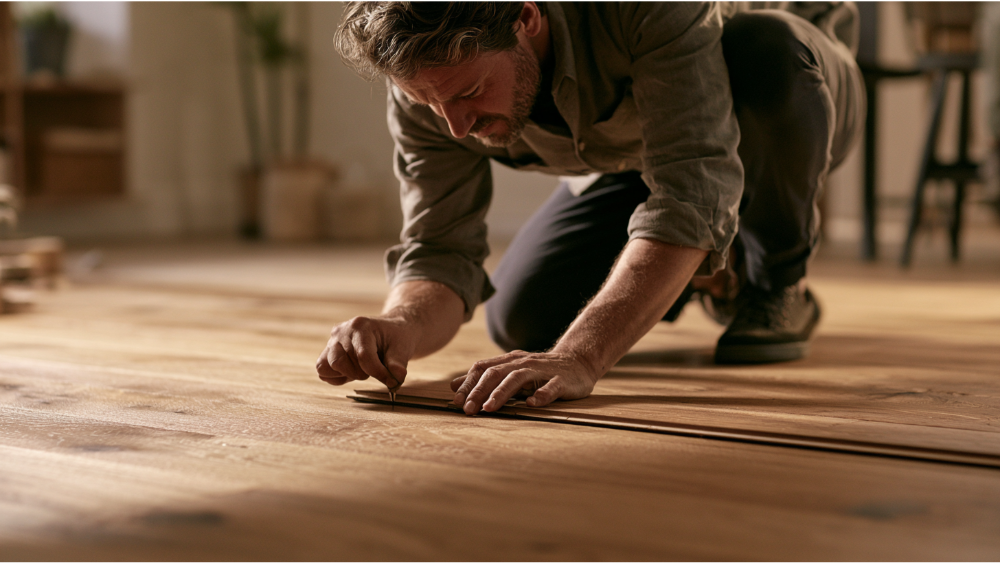
You can gather facts without guessing. Look at the edge of a floor vent or register, a threshold or transition strip, any leftover boards or the product box, or the manufacturer's spec sheet. A missing box isn't a dead end, since the spec sheet is often available online with a quick click. When in doubt, a pro can cut a small test area in a closet or another low-traffic spot in the house. These are all low-risk ways to learn the truth before deciding.
Refinish, Recoat, Repair, or Replace?
A screen-and-recoat lightly abrades the surface and adds fresh finish, preserving the veneer entirely. A full refinish sands to bare wood, then stains or seals it, which lets you change color and fix deeper damage but removes some veneer.
Refinish when the wear layer is thick, the floor is flat and stable, and the damage is surface scratches. Choose recoating, repair, or replacement when the veneer is thin, the surface is hand-scraped or distressed, or you're facing cupping, buckling, delamination, a gouge or hole through to the core, or exposed core. Any moisture problem has to be fixed before sanding starts, or those problems will resurface.
Seattle Factors: Moisture, Older Homes, and Contractor Rules
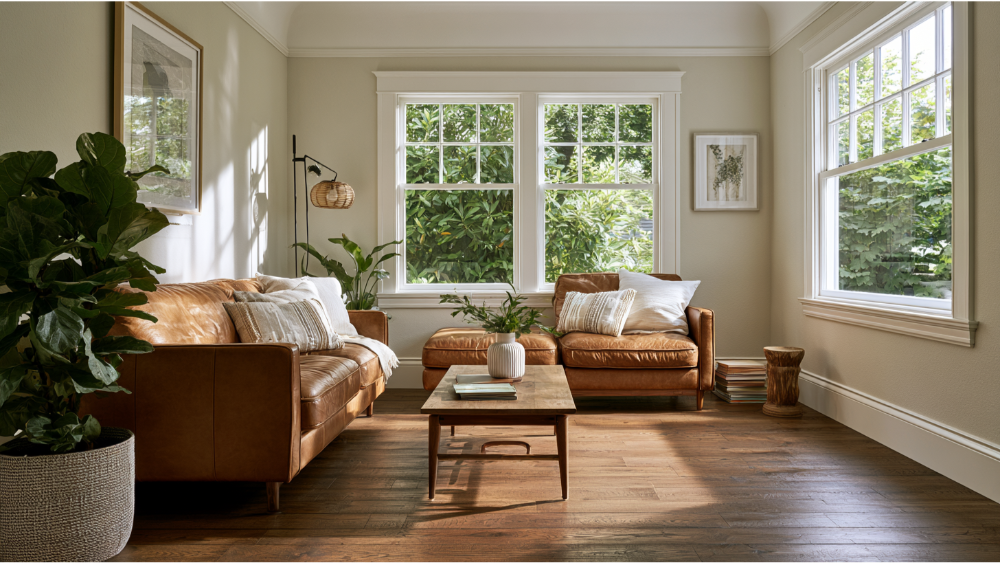
Wet entryways and mudrooms take a beating here, so keep good mats down in high-traffic areas and hold indoor humidity between 30% and 50% at 60 to 80°F for stability. Late spring or early fall tends to give finishes better curing conditions, and curing can take one to four weeks. We prioritize low-VOC finishes for indoor air quality. In older pre-1978 Bellevue and Seattle homes, if painted baseboards, stairs, or thresholds get disturbed, EPA lead-safe (RRP) practices are recommended and required. Before you hire anyone, verify their registration, bond, and insurance through Washington L&I's Verify tool. In Washington, contracts over $1,000 require a signed disclosure statement. Simple refinishing usually needs no permit, but subfloor or structural work can change that. We serve Bellevue, Seattle, Kirkland, Redmond, Issaquah, and across King and Snohomish County.
Why DIY Sanding Is Risky, and How We Help
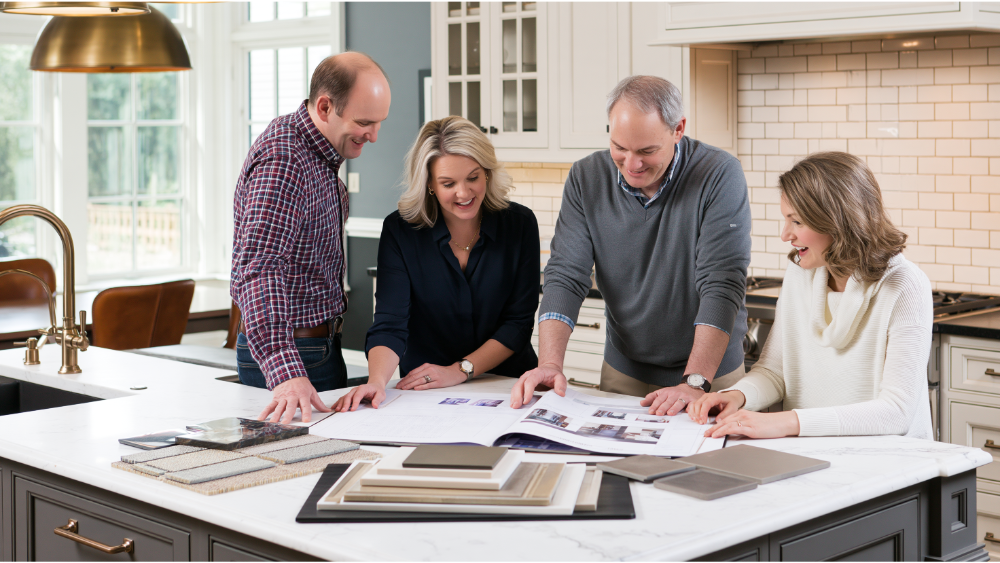
The margin on a thin veneer is small. A rented drum sander can cut through in seconds, making a fixable floor a full replacement. That single mistake is one of the most common problems we're called to fix. As an owner-led, family-owned team with 12 years of experience, we inspect the wear layer, check damage depth and moisture, and lay out your recoat, refinish, repair, or replace options with clear pricing and open communication. Our five-step process, from consultation and custom design through construction, walkthrough, and post-project support, is backed by a full-year warranty and built around lasting results.

.svg)

.webp)

.webp)