.avif)

How Primary and Guest Bathrooms Actually Differ
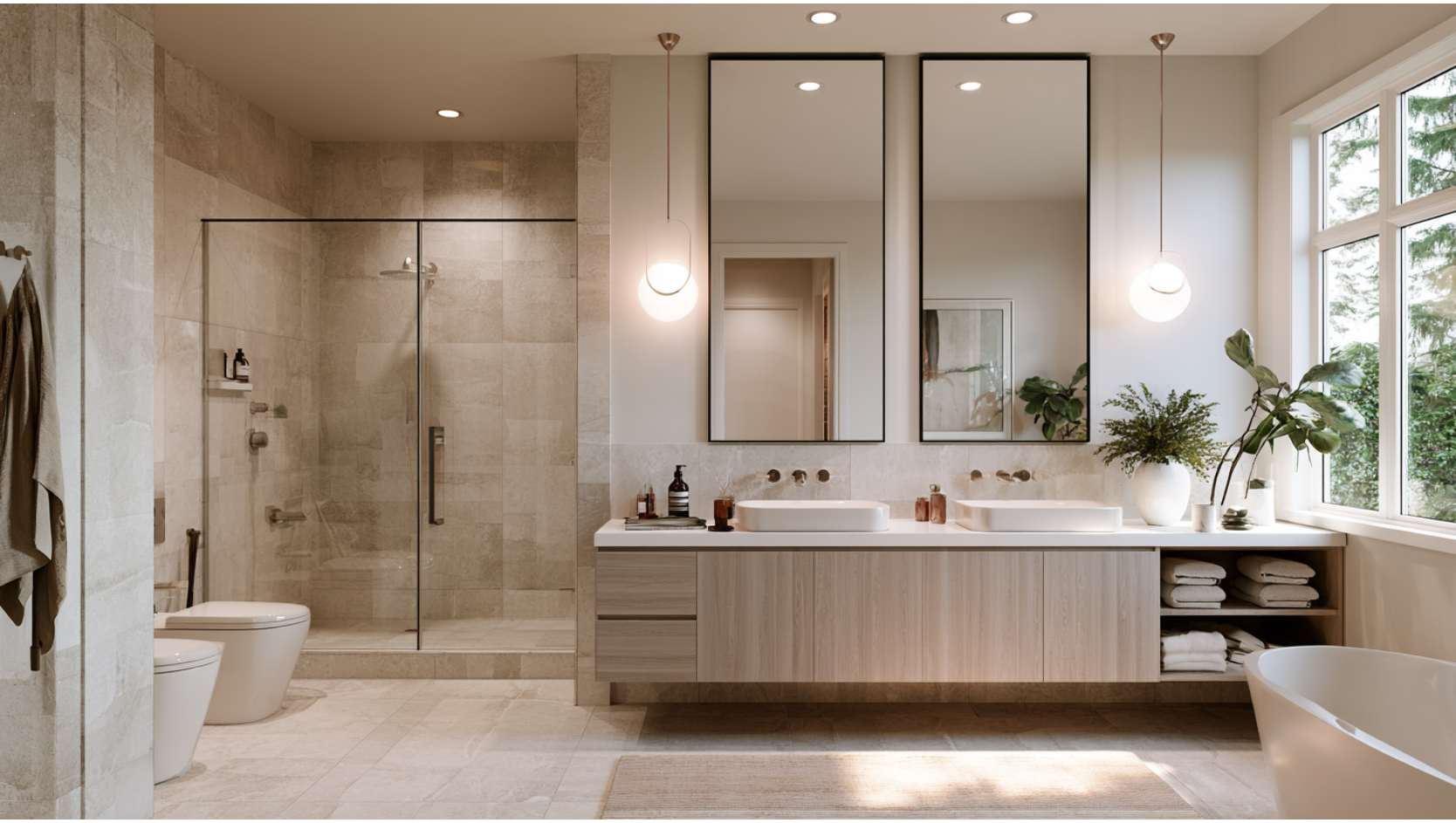
The two rooms serve different jobs, and that's why splitting your budget evenly rarely makes sense. Bathrooms are among the hardest working rooms in any house, and they're part of your daily routine in a way few other spaces are.
A primary bathroom is usually the larger of the two. It often carries at least four plumbing fixtures, sometimes dual vanities, and it's the space you use every morning and every night. It's tied to your routine, so comfort and storage matter as much as looks. A guest bathroom is typically smaller, with fewer features and lighter, more occasional use. Guests, kids, and the occasional overnight visitor pass through it, which means durability and easy cleaning tend to matter more than a spa-like feel.
That gap in size and function is the whole reason to spend unevenly. A primary bathroom simply has more square footage, more fixtures, and more daily demand riding on it. A guest bath can be beautiful and practical without matching that scope. Understanding which room you're really investing in keeps you from overbuilding one while the other stays dated.
The Quick Decision Rule on Primary Bathroom vs Guest Bathroom Remodel: Where to Spend Your Budget
Here's the rule we come back to with almost every homeowner who's deciding where to start:
- Spend more on the primary bathroom if you plan to stay in the home. Daily comfort, a better shower, and real storage pay you back every single day.
- Spend more on the guest bathroom if you're selling soon or it's the most visible, most-used shared bath in the house.
- Spend first on hidden quality in both. Waterproofing, plumbing, and ventilation come before any finish, no matter which room you tackle.
Mid-range remodels tend to recoup a higher percentage than luxury ones, so a resale-focused guest bathroom remodel doesn't need every premium upgrade to make sense. We believe budget should follow how each room works for your life, not a formula that treats every bathroom the same. Start with the room that's failing you or the one a buyer will notice, then build out from there.
Primary Bathroom Remodel: Where the Extra Budget Pays Off
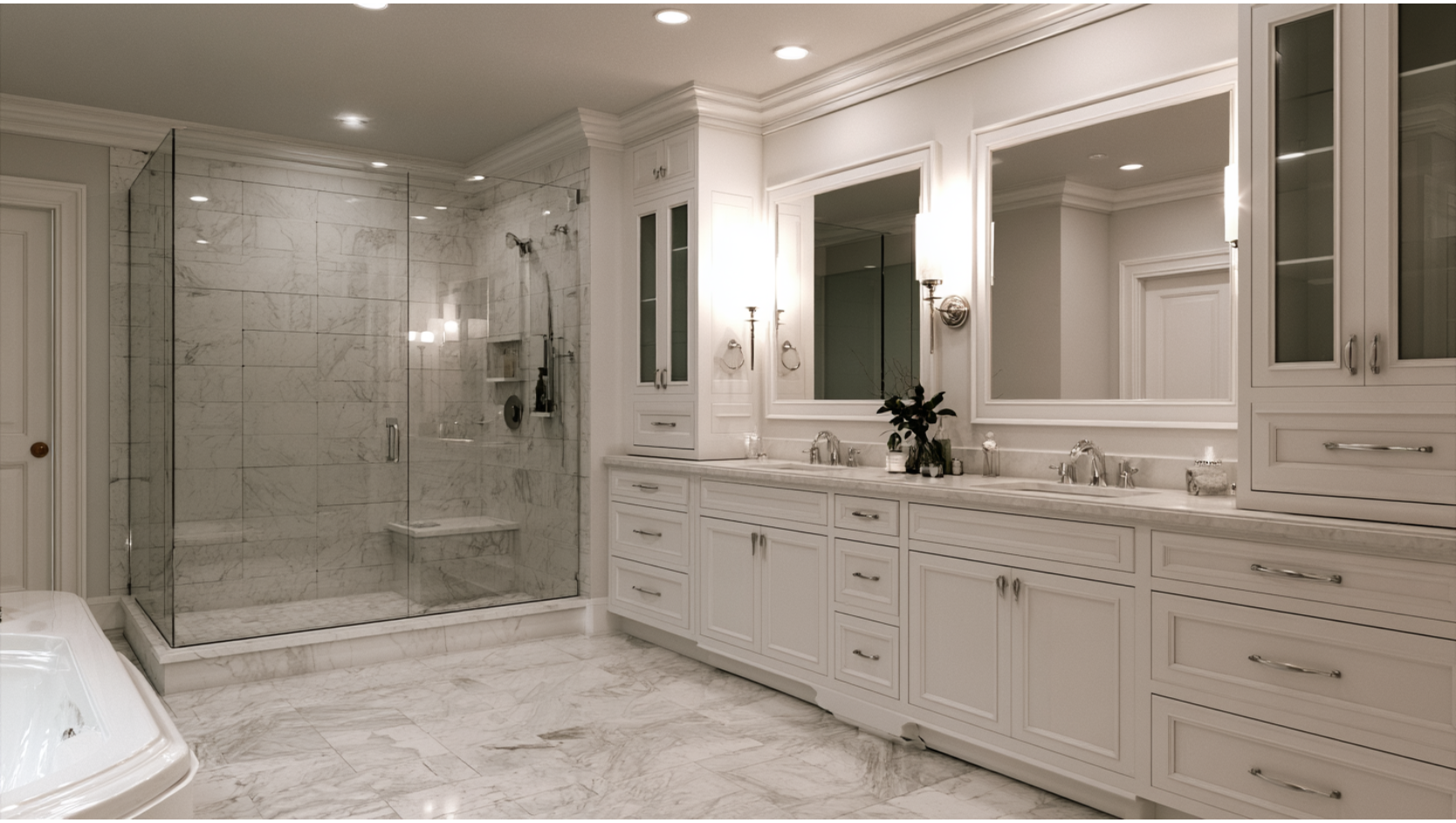
If you're staying put, a primary bathroom remodel is where careful spending earns its keep. This is the room 25% of homeowners use to rest and unwind and 24% use for their beauty and pampering routines, according to the 2025 Houzz bathroom study. Small daily frustrations here add up, and a good remodel erases them.
A few upgrades tend to deliver the most:
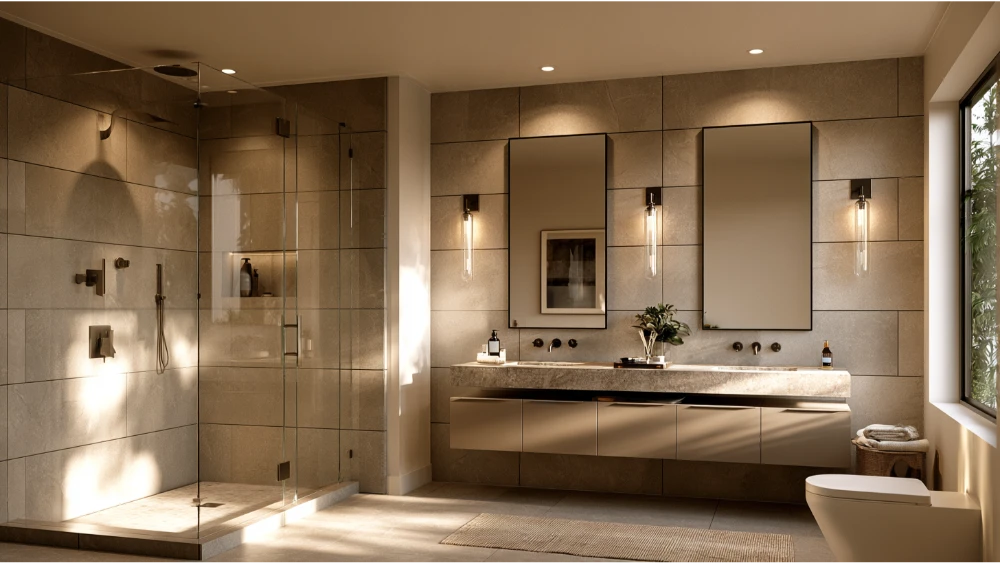
- A larger walk in shower. Nearly 39% of homeowners increase shower size during a remodel, and among those who remove a tub, 82% use that space to enlarge the shower. If you have another tub in the house, converting yours to a roomy walk in shower is often the single biggest comfort gain. Custom walk in showers with a clean glass shower door or fixed glass doors can make the space feel open and modern.
- A custom or semicustom vanity. More than half of homeowners (55%) choose custom or semicustom vanities, and for a primary bath that carries your daily storage, a quality vanity with a durable sink and quality faucet is worth the spend. Marble countertops or another natural stone add a high-end focal point when the budget allows.
- Durable tile and flooring with proper waterproofing. Quality materials installed correctly are what make the room last, whether that's porcelain tile flooring or a warm, moisture-resistant alternative.
- Strong lighting, a well-placed mirror, and good ventilation. A large mirror over the vanity, layered lighting from a good light fixture, and a properly ducted fan all change how the space feels and how well it holds up to moisture. Medicine cabinets add tidy storage without eating floor space.
- Comfort touches like heated floors. Optional, but frequently appreciated in a room you use twice a day.
This is the room where a tailored approach makes sense, because it's built around your routine and your vision. High end features here should still earn their place. We'd rather help you invest in finishes and storage that fit your life than talk you into extras you won't use.
Guest and Main Bathroom Remodel: Where to Spend and Where to Stay Practical
A guest bathroom rewards restraint, not corner-cutting. The two aren't the same. You can build a clean, durable, genuinely nice guest or main bathroom without matching the primary bathroom's budget, and often you should. Small, thoughtful choices in hardware and finish make a huge difference here.
Where to focus:
- Durable, easy-to-clean surfaces. This room gets used by people who won't baby it, so materials that wipe down and wear well matter most, from the flooring to the vanity top.
- Good lighting and ventilation. Both are cheap insurance against a bathroom that feels dim or holds moisture.
- A smart tub-versus-shower call. Keeping a tub can matter for families and for resale, especially if it's the home's only one. Don't rip it out on impulse.
- Neutral design that still has character. A simple new vanity, a clean mirror, and a durable sink can look sharp without heavy customization. A well-chosen paint color ties the room together for very little cost.
- Guest- and kid-friendly hardware and storage. Simple, sturdy towel bars and an easy-to-reach toilet paper holder go a long way. A shower curtain also costs far less than a custom enclosure when you're keeping things practical.
Two honest ways to save money here without sacrificing quality: choose mid-range materials that look and wear well, and keep the existing layout so you're not paying to move drains and vents. Many homeowners overspend by relocating plumbing they could have left alone. A powder room is the most pared-down case of all, with no shower or tub to worry about, usually just a toilet, a sink, and a mirror in a compact space. Even in a powder room, neutral and durable still deserve real craftsmanship. Cheap installation shows fast.
Small Bathroom Remodel: Making a Small Space Work Harder
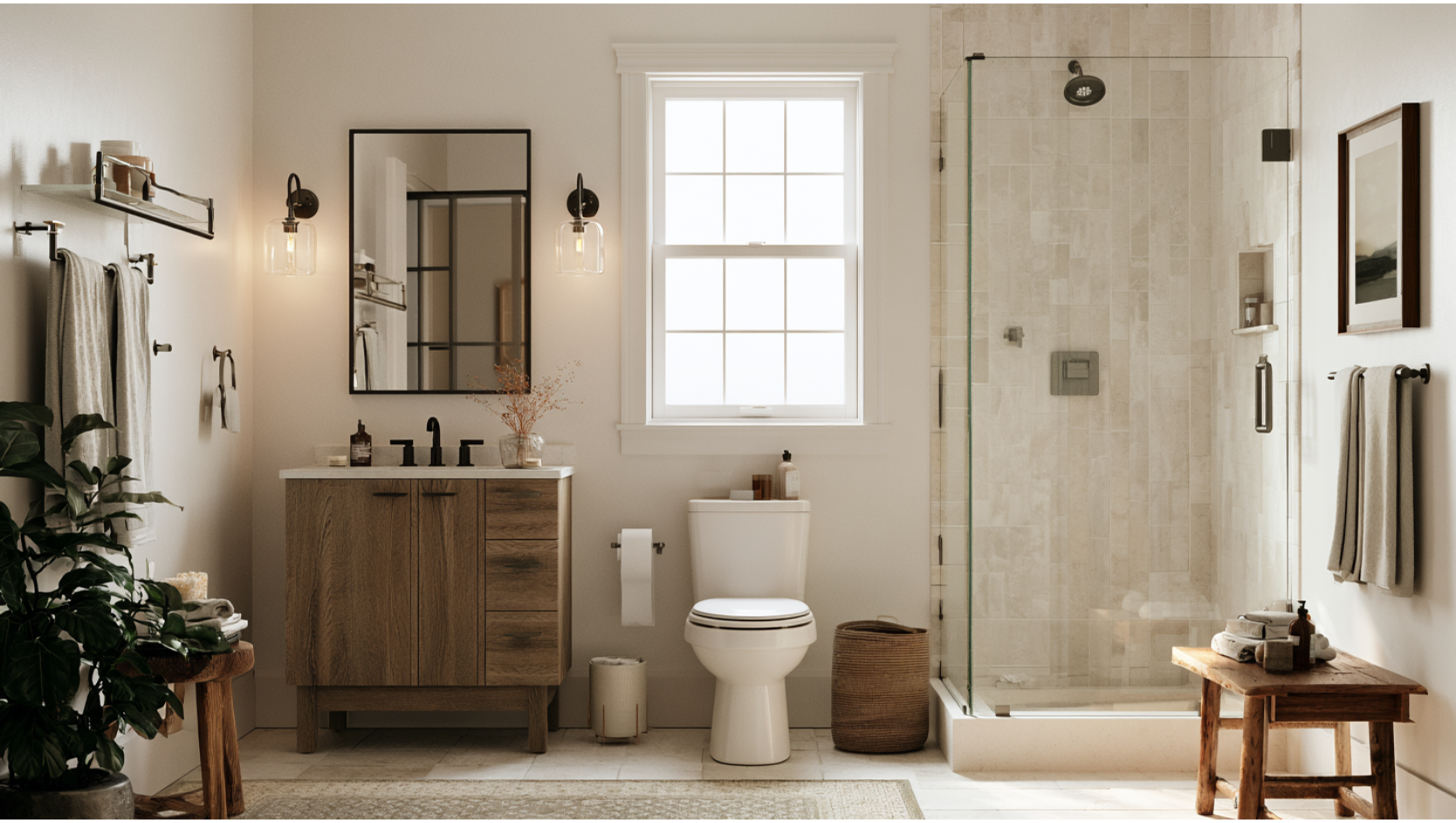
A small bathroom asks for smarter choices, not lower standards. In a tight footprint, every fixture and every inch of storage has to earn its place. A small bathroom remodel often centers on a compact vanity, a wall-hung sink, or a corner walk in shower that opens up the floor. A large mirror can make the space feel bigger, light-toned vinyl flooring keeps it from feeling boxed in, and a well-chosen toilet frees up room where it's tight.
The good news is that a small space usually means fewer square feet of tile and fewer fixtures, which can lower material cost. The catch is that labor in a small bathroom is often just as demanding, because working in a cramped space takes care. We plan these projects around function first, so the room feels open and works hard every day.
What Every Bathroom Budget Should Protect First
This is the part most homeowners underestimate, and it's where bad contractors quietly cut corners. Before a dollar goes toward finishes, both bathrooms need the money that never shows.
Protect these first, every time:
- Waterproofing. The membrane and prep behind your tile are what keep water out of your walls and floor. Get this wrong and no finish can save you.
- Sound plumbing. Old or failing supply and drain lines are far cheaper to address while walls are already open, and plumbing work like updating the rough-in for a new sink or toilet is best done then.
- Ventilation. A properly sized, correctly ducted fan protects finishes, paint, and air quality.
- Electrical safety. Bathrooms mix water and power, so electrical work is not the place to improvise.
- Quality tile and flooring installation. Even great tile fails when it's set poorly, and flooring that isn't laid on a sound substrate won't last.
- Subfloor and wall repair. Hidden rot or damage has to be fixed before anything new goes on top.
In the Houzz study, 61% of homeowners upgraded ventilation, heating, or plumbing during their bathroom renovation. There's a reason for that. Labor costs typically run 40% to 65% of a bathroom remodel, and that's not waste. It's skilled installation, which is precisely what makes finishes last. We treat quality materials and correct installation as non-negotiable, because that's what protects your home long after the project wraps.
Primary vs. Guest Bathroom Budget Priorities: Side-by-Side
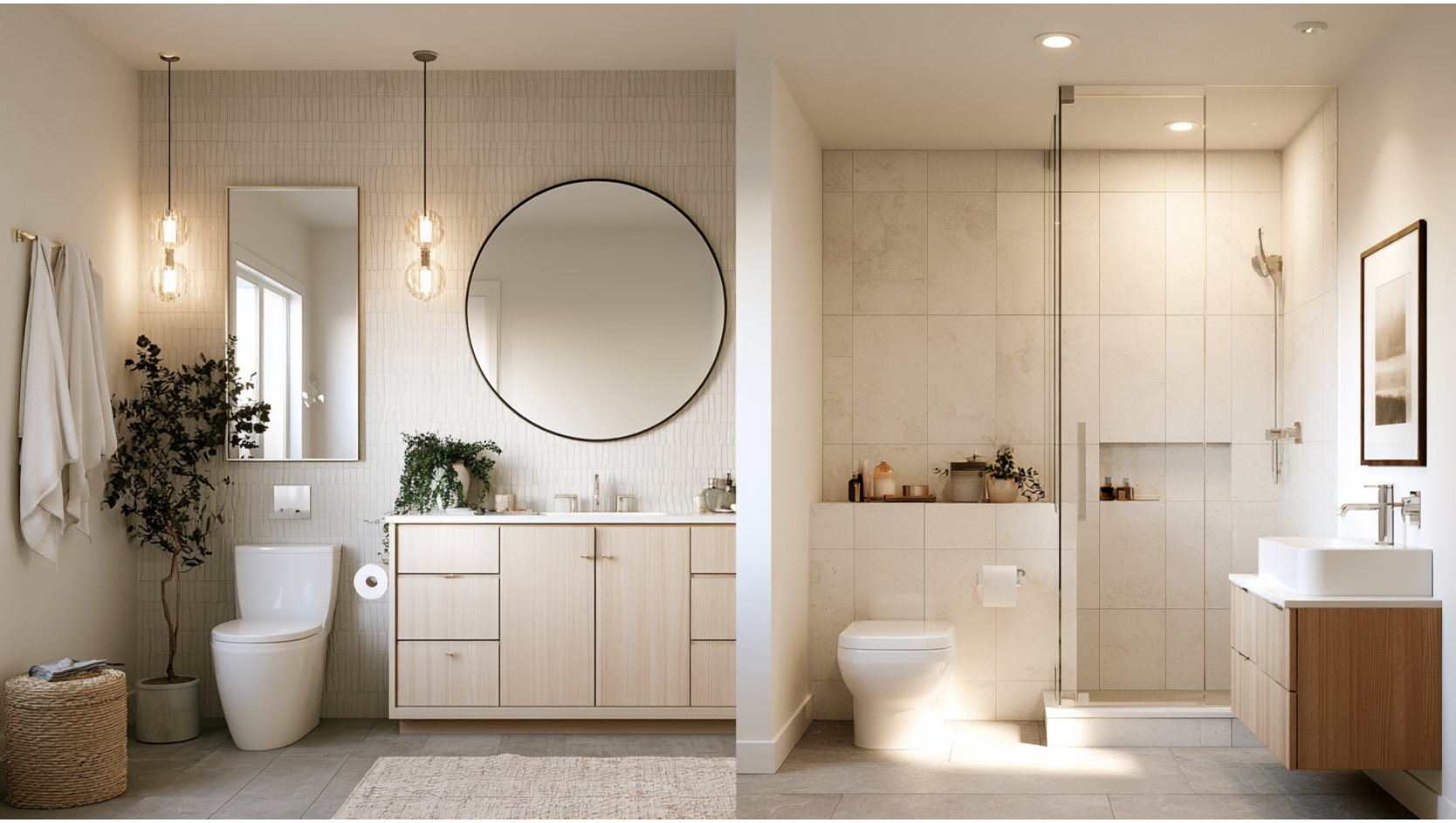
Here's a quick reference for where extra spending belongs and where it never should be trimmed.
Resale Value: Does the Primary or Guest Bathroom Pay Back More?
Resale is one reason 28% of homeowners renovate a bathroom, so it deserves an honest look. The clearest pattern in the data: mid-range remodels tend to recoup a higher percentage of their cost than upscale ones. In the 2025 Cost vs. Value report, a national mid-range bath remodel recouped about 80% of the project cost, a universal-design bath around 61%, and an upscale bath roughly 42%.
The lesson for a resale-focused homeowner is to favor clean, durable, broadly appealing work over heavy customization. Pouring money into high-end, personalized finishes rarely returns as much at sale, so replacing tired surfaces with practical ones often beats chasing luxury.
One important caveat for readers in the Bellevue and greater Seattle area: local markets vary, and "spend more" doesn't reliably mean "recoup more." The same 2025 report listed Seattle-area cost recouped at about 46.8% for a mid-range bath and 35.3% for an upscale one. Those figures are market-specific and shift year to year, so treat them as illustration rather than a promise. If resale is your driver, the safer play is quality work with wide appeal, in whichever bathroom a buyer will judge first.
When to Remodel the Guest or Main Bathroom First
Sometimes the guest bath earns priority. Consider tackling it first if:
- You're planning to sell in the near future.
- The main bathroom or half bath is visibly dated and greets every visitor.
- It's the only bathroom guests actually use.
- Children or a multigenerational household lean on it heavily.
- It has moisture or safety issues while your primary bath still functions fine.
In these cases you can usually make a strong impression on a smaller budget, especially by keeping the layout and choosing durable, easy-care flooring and fixtures.
When to Remodel the Primary Bathroom First
Put the primary bathroom first if:
- You use it every day and it's wearing on you.
- A poor layout strains your mornings and evenings.
- The shower or tub is uncomfortable or feels unsafe.
- Storage is failing and clutter has nowhere to go.
- You plan to stay in the home long-term.
- You're thinking ahead for aging in place.
That last point is more common than people expect. In the Houzz study, 68% of homeowners factored special needs into their bathroom project, and 47% anticipated those needs five or more years out. Planning a curbless walk in shower, grab-bar blocking, or a comfortable layout now is far easier than retrofitting later. Done right, the primary bathroom becomes a tailored retreat that supports your daily routine for years.
Bellevue and Washington Planning Notes
If you're remodeling in Bellevue or the surrounding King and Snohomish County area, a few local rules are worth knowing before you finalize scope. This is general guidance, so confirm specifics with your local building department.
- Permits. The City of Bellevue may require a permit when you move a fixture, replace a tub or shower, or alter plumbing behind walls, ceilings, or under floors. Swapping a sink, toilet, or faucet in the same spot, done to code, often doesn't need one.
- Ventilation. Washington code calls for local exhaust of at least 50 cfm intermittent or 20 cfm continuous, ducted directly to the outside. The fan is not an afterthought, especially in a moisture-heavy primary bathroom.
- Fixture clearances. A toilet needs at least 15 inches from center to a side wall, 30 inches center-to-center from a nearby fixture, and 21 inches of clear space in front. These affect what layout changes are even feasible, which matters most in a small bathroom.
- Contractor verification. Check any general contractor through Washington L&I for active registration, bonding, and insurance before you sign. State law requires contractors to be registered, bonded, and insured.
- Lead-safe work. Homes built before 1978 fall under RRP rules when work disturbs more than 6 square feet of interior painted surface.
Washington's 2021 residential and plumbing codes took effect statewide on March 15, 2024, so current projects follow those standards.
How to Avoid Surprise Costs and Keep the Project on Track
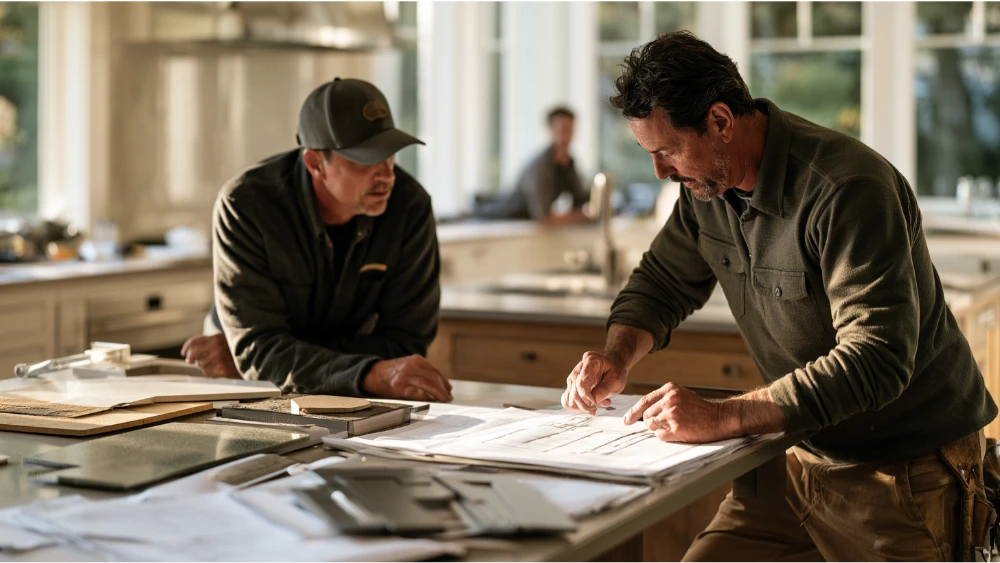
Most "surprise" costs aren't bad luck. They come from unclear scope. When the plan isn't fully defined before demolition, decisions get made mid-project, and that's where budgets slip. A clear, written scope agreed on before construction starts is your best safeguard against unexpected project cost.
Washington L&I offers useful advice here: compare bids on scope of work, warranties, references, and completion dates, not on price alone. The state also flags red flags worth watching for, including high-pressure same-day pricing, cash-only demands, no written contract or complete bid, and offers that sound too good to be true. Remember that labor costs run 40% to 65% of a remodel, so a bid that undercuts everyone usually cut something you can't see, whether that's waterproofing, a quality sink, or proper flooring prep. We'd rather show you exactly what's included up front than surprise you later.
How Oleg & Sons Helps You Make the Right Choice
We're a family-owned remodeling company based in Bellevue, and with 12 years of experience, we've helped homeowners across King and Snohomish County make exactly this call. Unlike some home builders who work at volume, we stay hands-on with each project. Our work starts with a free consultation and a clear plan, moves into custom design and material selection built around your vision, and continues through professional construction with open communication so you're never left in the dark. We finish with a final walkthrough, post-project support, and a full-year warranty on our remodeling services. Clear pricing and honest scope aren't extras for us. They're how we work.

.svg)
.webp)

.webp)