.avif)

Custom vs Stock Cabinets for Your Seattle Home: The Short Answer
Stock cabinets are the right fit when your kitchen has a standard layout and your design needs are straightforward. Custom cabinets make more sense when your home has irregular dimensions, older or uneven walls, integrated storage needs, or a specific vision that stock cabinetry can't accommodate. Semi custom cabinets sit in between and often solve most common fit problems without going fully custom.
A kitchen remodel is a significant investment, both financially and emotionally, and cabinets carry a lot of that weight. They shape how you store things, how you move through the room, and how the finished space feels. If you're a homeowner around Bellevue or greater Seattle weighing this decision, the goal here is simple: help you match the cabinet type to your actual house, not a general rule.
Custom Cabinetry, Semi Custom Cabinetry, and Stock Cabinets: What's the Difference?
Stock cabinets are mass produced in standard sizes and a limited range of styles. Custom cabinets are built to order for your specific dimensions, with far more freedom in size, finish, and features. Semi custom cabinets land in the middle, offering more sizing and style options than stock without the full scope of custom cabinetry.
The clearest way to see the difference is sizing flexibility. According to the U.S. International Trade Commission, stock cabinets are generally offered in 3-inch increments, semi custom cabinets in 1-inch increments, and custom cabinets in any increment. That single detail drives a lot of the practical decisions below, from fit to cost.
What Are Stock Cabinets from Big Box Stores?
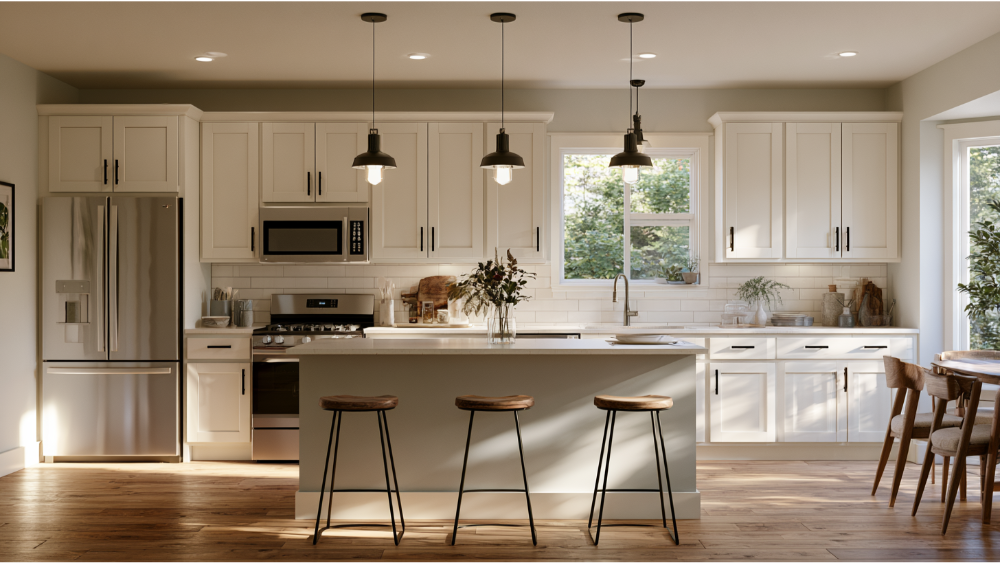
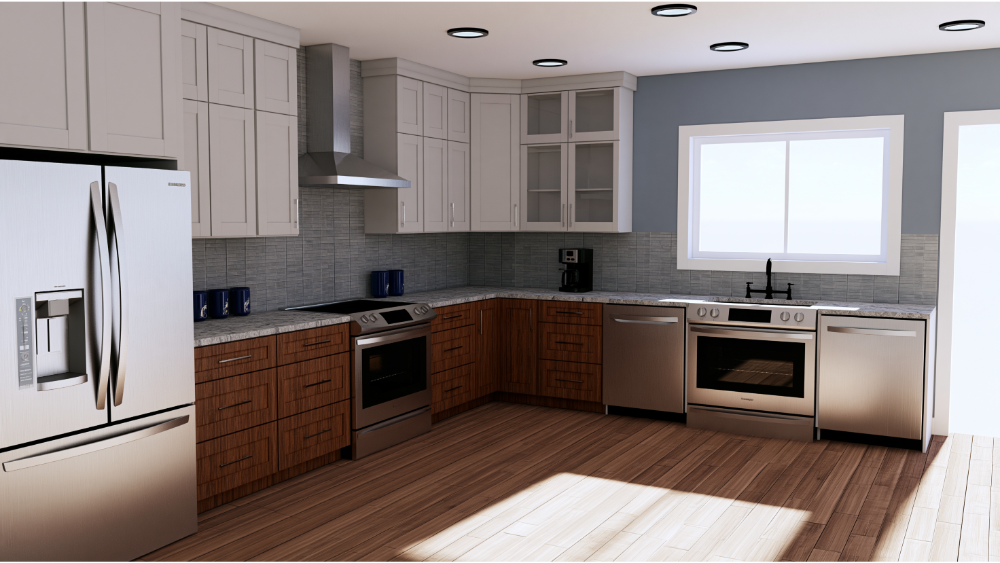
Stock cabinets are pre-built in standard sizes and shipped ready to install, and they are what you'll most often find on the floor at big box stores. Because they're already made, the lead time is short and you can often have them within days of buying, which makes them appealing when your timeline is tight. They come in a limited range of door styles and finishes, so the design menu is smaller, but the package is simpler to plan around and easier on the budget.
The 3-inch increment is the tradeoff to understand. When your wall length doesn't divide neatly into standard box widths, the difference gets absorbed by filler panels, and you can end up with pockets of dead space in a run. That's fine in many kitchens and worth knowing before you commit.
Don't assume stock means low quality. Many higher-end stock lines now include soft-close hinges, full-extension drawers, and solid hardware, features once reserved for pricier cabinetry. For standard layouts, rental properties, secondary spaces, or a focused refresh, stock can be a smart, cost effective choice at a lower cost. Well-made stock cabinets typically last around 10 to 15 years with normal use.
What Are Fully Custom Cabinets?
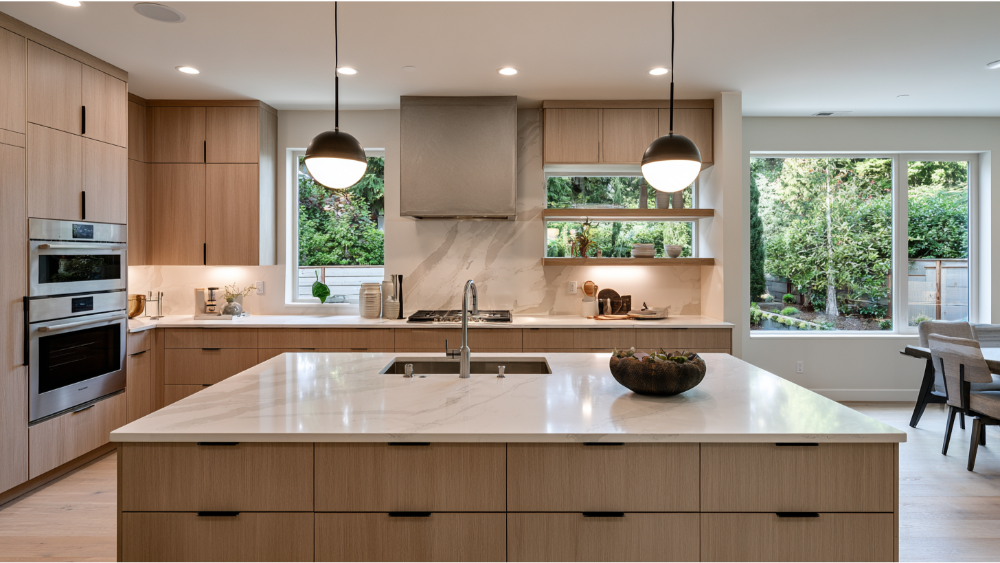
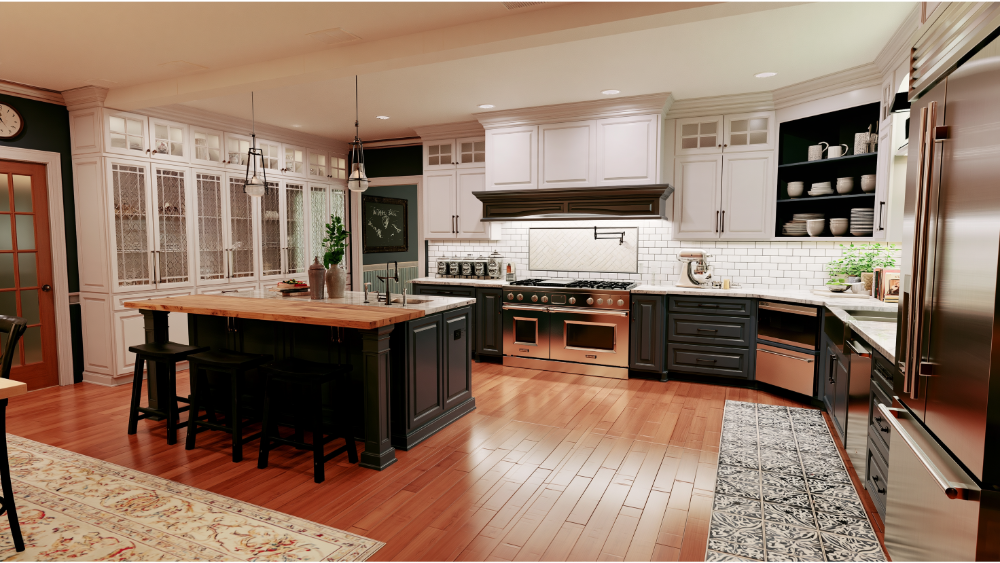
Custom cabinets are built specifically for your kitchen. Because they can be made in any increment, they eliminate most filler panels and wasted space, which is a real advantage in rooms with awkward dimensions. That precision is where custom cabinetry earns its reputation, and where a skilled cabinet maker matters most. It is also why fully custom cabinets appeal to homeowners who want a look you simply can't pull off the shelf.
Custom is the strongest choice when your home calls for something standard sizes can't deliver: integrated appliances, built-in pantries, specialty storage, custom doors, or a design that reflects how you actually live. The boxes are often plywood or solid wood, and your choice of wood species shapes both the look and the price. Details like dovetail drawer joints and matched drawer fronts hold up over decades. That level of customization is the whole point, and it is what makes custom cabinetry worth a closer look for the long haul. Well-built custom cabinets can last 20 to 30 years or more with proper care.
Every home reflects the owner's style, and custom work is where that shows most clearly. The honest tradeoff is time and cost. Custom cabinets require a design consultation and material ordering, and lead times generally run 6 to 12 weeks, sometimes longer depending on selections and the manufacturer. Knowing that upfront keeps the timeline free of surprises.
Where Semi Custom Cabinetry Fits
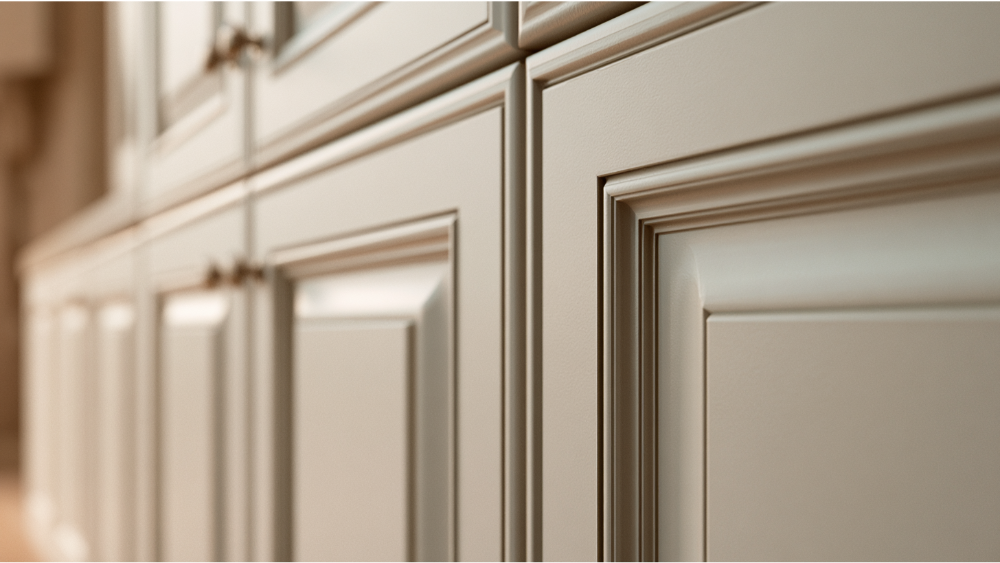
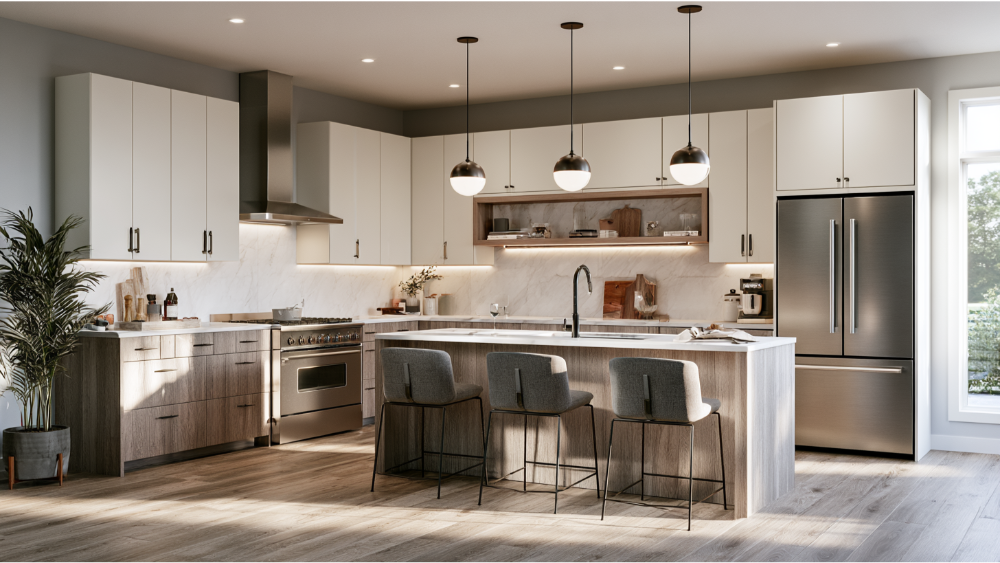
Semi custom cabinets give you more room to fine-tune without going all the way to custom. The 1-inch sizing increment alone closes many of the gaps stock leaves behind, and semi custom lines add a wider range of door styles, finishes, and modifications. That combination of customization and value fixes a lot of common layout and storage headaches for less than full custom cabinetry.
This is a good middle ground when you want better fit and more style control but don't need every element built from scratch. If stock feels too rigid and full custom feels like more than your project requires, semi custom cabinetry is often the practical answer, and its semi custom options keep the budget in a more predictable place. What custom offers over these semi custom lines is unlimited design flexibility, which not every project needs.
Seattle-Area Factors That Can Change Your Decision
Local homes complicate the neat national comparison, and this is where the decision gets specific.
Older and uneven walls. Established Bellevue and Seattle neighborhoods are full of homes where walls aren't perfectly square. Standard boxes can leave visible gaps in those spaces, while custom or semi custom cabinets can be scribed and sized for a precise fit.
Small kitchens and tight aisles. The National Kitchen and Bath Association recommends work aisles of at least 42 inches for one cook and 48 inches for two or more. In a compact kitchen, gaining even a few inches through smarter cabinet sizing can change how the whole room functions, including island placement and traffic flow.
Permitting. Both Seattle's Department of Construction and Inspections and the City of Bellevue state that replacing kitchen cabinets alone usually does not require a building permit. But plumbing, electrical, wall, or structural changes can trigger permit requirements, and Seattle notes a threshold for minor alterations. Confirm your project's full scope rather than assuming "new cabinets" means "no permits."
Pre-1978 lead-safe practices. The EPA's Renovation, Repair, and Painting Rule applies to homes built before 1978. If cabinet removal disturbs old painted surfaces in an older home, lead-safe work practices should be part of the conversation.
Construction Quality Matters More Than the "Custom" Label
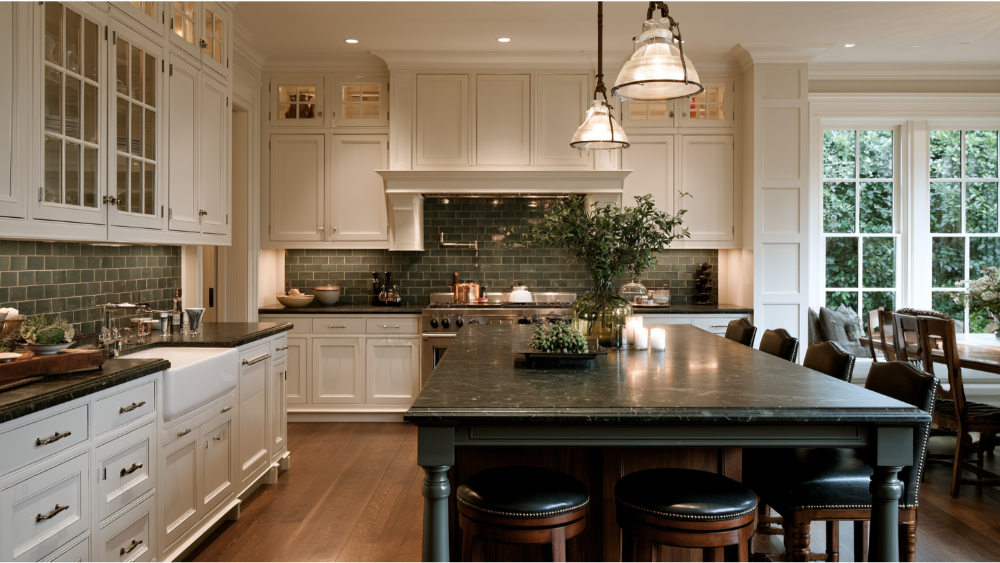
The category name doesn't guarantee quality. Construction quality, materials, finish, and installation do. A well-built stock line can perform nearly as well as custom, while a poorly built cabinet of any type will disappoint regardless of price.
Recognized performance standards make this concrete. Under the ANSI/KCMA A161.1 standard, doors and drawers are cycled 25,000 times, wall cabinets up to 36 inches wide must hold 600 pounds without failure, shelves are loaded at 15 lb. per square foot, and wood is dried to a moisture content of 10 percent or less. Those tests measure how a cabinet actually holds up, not what it's called.
When you're comparing options, look past the label and inspect the details:
- Box material: plywood or solid wood tends to outlast particleboard.
- Drawer construction: dovetail joints signal durability.
- Slides and hinges: full-extension slides and soft-close hinges.
- Hardware and doors: solid hardware and well-fitted doors that resist sagging.
- Finish: resistance to everyday kitchen wear.
There's also an air-quality angle. Composite wood materials like plywood, MDF, and particleboard should be TSCA Title VI compliant for formaldehyde emissions, so it's fair to ask what your boxes and panels are made from. We believe high quality materials are non-negotiable, because they're what makes results last.
When Stock Cabinets Might Be the Right Call
Stock can be the smart, sensible pick, not a compromise. It tends to be the right call when:
- Your kitchen layout is standard and works with common box sizes.
- Your style preferences are straightforward and the available doors suit them.
- Your timeline is short and you want a lead time measured in days.
- The space is a rental, a secondary kitchen, or a limited-scope remodel.
- Your budget is a driving factor on the project.
Paired with quality construction and careful installation, a good stock package can serve a home well for years. For many homeowners, that balance of price and performance is exactly what a straightforward project calls for.
When Custom Cabinetry Is Worth the Extra Cost

Custom becomes the better investment when your home or goals call for it, even at the extra cost:
- Odd or irregular kitchen dimensions.
- Older, non-square walls where you want fewer filler panels.
- A built-in pantry, custom doors, or paneled appliance fronts.
- Aging-in-place or accessibility storage.
- An open-concept kitchen where cabinetry should match the rest of the home's millwork.
- A long-term home you plan to stay in for decades.
Resale value is part of the picture too, and it is something homeowners planning a longer stay tend to weigh carefully. Kitchen work tends to recover a meaningful share of its cost, roughly 60 to 75 percent in many mid-range remodels reported by the National Association of Realtors, and many buyers respond well to custom cabinetry. If you plan to sell down the road, thoughtful custom work often shows better than a bare-minimum approach, though it's rarely the only factor that moves a price.
Custom Kitchen Cabinets vs Stock Cabinets: The Price Difference for Your Seattle Home
The price difference is often the deciding factor, and it usually comes down to how cabinets are priced. Stock runs at the lowest cost, semi custom in the middle, and custom highest, frequently quoted by the linear foot. Most homeowners find that a clear breakdown makes the choice easier, because you can see exactly where your money goes. When you're comparing quotes, ask whether the number covers materials, delivery, and installation, so the price you hear is the price of getting cabinets installed and finished, not just the boxes on a truck.
Can You Mix Stock and Custom Cabinets?
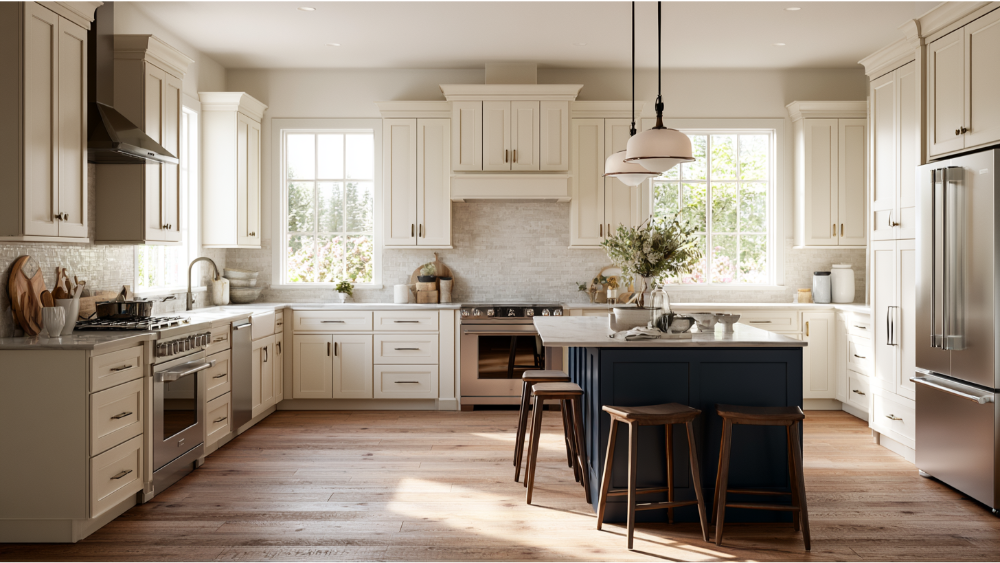
Yes, and it's a practical strategy we use often. Stock or semi custom cabinets can cover the standard perimeter runs, while custom pieces handle the island, pantry, awkward corners, appliance integration, or built-ins. You get tailored function where it counts and efficient sizing everywhere else. The right mix depends on your home and your budget, and that's exactly the kind of balance we help homeowners strike without overspending on upgrades you don't need.
Questions to Ask Before You Choose Cabinets
Before you commit, get clear answers to these:
- What are the cabinet boxes and doors made from?
- Are the composite wood materials TSCA Title VI compliant?
- What drawer slides, hinges, and hardware are used?
- How are fillers, corners, and appliance clearances handled?
- Who is the manufacturer, and what's the lead time?
- Who measures and who installs?
- What happens if the walls aren't square?
- Is plumbing, electrical, or permit scope included in the cost?
- What's the warranty and post-project support?
Straight answers here are a good sign. Clear pricing and open communication mean no surprises once the work starts.
How Oleg & Sons Plans Your Kitchen Cabinets
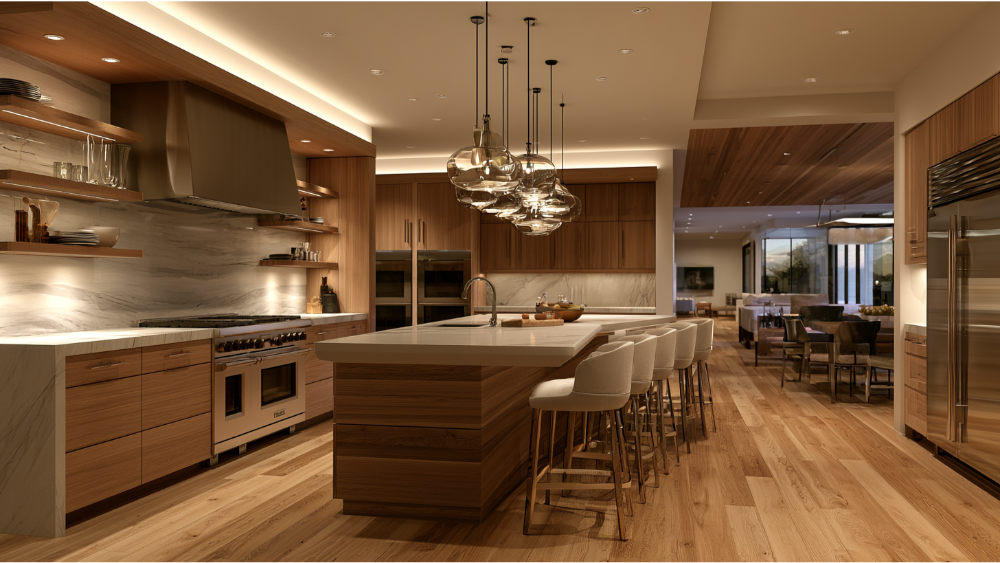
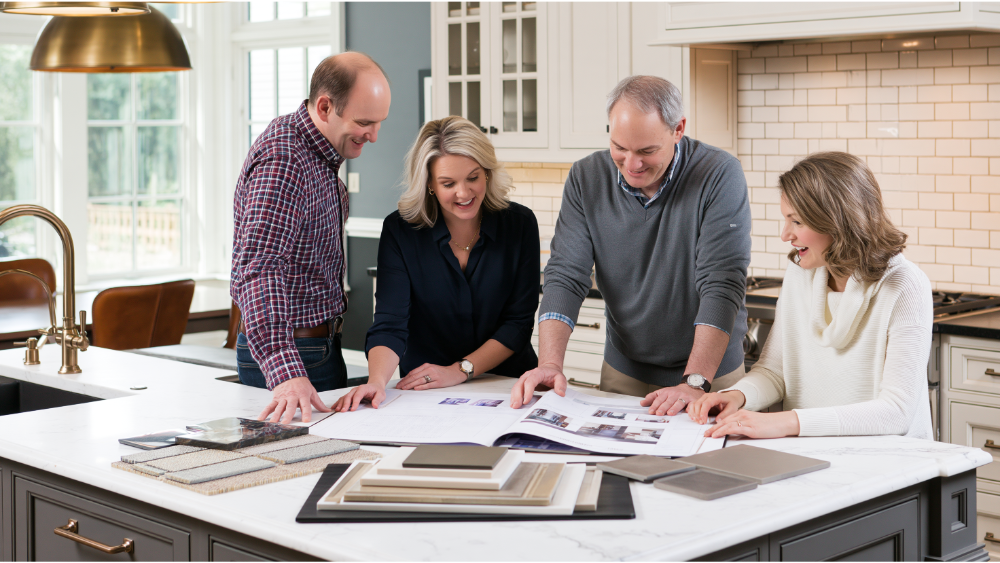
We're a family-owned, owner-led remodeling company in Bellevue with 12 years of experience, and we treat every kitchen as personal. Our process follows a clear arc from start to finish. It begins with consultation and planning, where we listen and measure carefully. Then comes custom design and material selection, matching quality materials to your vision and your budget. During professional construction, our craftsmen handle the work with meticulous attention to detail and regular updates, so you're never in the dark. We close with a final walkthrough and approval, then stand behind the job with post-project support and a full-year warranty. Most people appreciate knowing what happens at each stage before we ever start.
Pricing is transparent and quoted upfront. Before hiring any contractor, we'd encourage you to verify their active registration, bond, and insurance through Washington State L&I, which is easy to check online.
If you're ready to talk it through, sign up for a free call. Let's start planning together.

.svg)


.webp)

.webp)