.avif)

How to Choose a Countertop Before You Compare Materials
Every countertop material balances three things: performance, appearance, and how much you're willing to maintain it. Before you fall for a slab in a showroom, answer a few honest questions about your household.
- How often do you actually cook, and how hard is the surface used?
- Do you set hot pots and pans directly on the counter, or reach for a trivet?
- Do you want a kitchen countertop you can wipe and forget, or are you comfortable with periodic sealing?
- Do you like the natural variation of stone, or the consistent pattern of an engineered surface?
- Is this a busy family kitchen, an entertaining space, or a statement kitchen style?
Many homeowners choose more than one material. In the 2026 Houzz Kitchen Trends Study of 1,780 U.S. homeowners, 21% picked different surfaces for the island and perimeter, often pairing a durable perimeter with a warmer island. Avid cooks who put their counters through real work tend to lean toward granite, quartzite, quartz, or porcelain for that reason. Cost matters too, and the price you pay depends on the material you pick, the square foot coverage your layout needs, and the edge and finish details you choose.
Quick Kitchen Countertop Types Comparison Table
Here's an at-a-glance look at the most common styles before we go deeper on each one.
Quartz: A Low-Maintenance, Highly Durable Countertop Material
Quartz is an engineered stone made from natural quartz combined with resin, which makes it non porous. Stains and bacteria struggle to penetrate the surface, and it never needs sealing. You get consistent patterning across slabs and an easy wipe-down with mild soap. That combination is why quartz countertops are one of the most popular choices for busy kitchens.
The one real caution comes from that same resin. High heat can cause permanent discoloration or white spots, so quartz is heat resistant only up to a point. Keep a trivet nearby and don't set a hot pan straight from the stove onto the surface. For everyday scratches and spills, quartz is highly durable and hard to beat, and its stain resistant surface fits our belief that quality materials produce lasting results. Quartz also tends to hold strong resale value, which matters if you may sell someday. (The silica exposure that comes up with engineered stone is a fabrication concern for the shop, not something that affects you after installation. More on that below.)
Porcelain and Sintered Slab Countertops
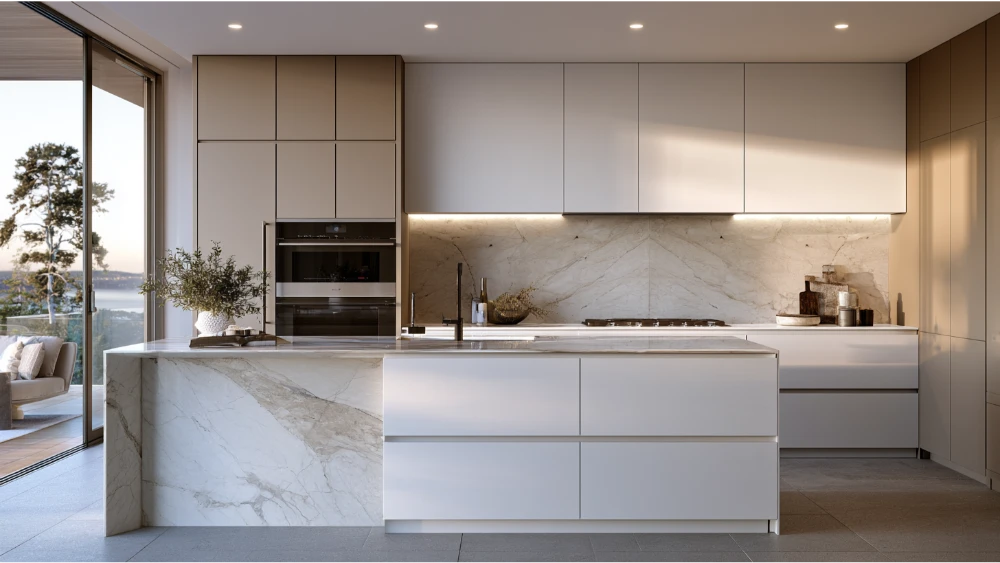
Porcelain slabs are among the most durable surfaces you can put in a kitchen. They resist heat, stains, and scratches, they hold up to UV fading, and they require no sealing. For an avid cook who wants a clean, modern surface with minimal fuss, this heat resistant material earns its place.
The tradeoff is fabrication cost and skill. Porcelain demands a skilled hand because exposed edges can chip if they aren't cut and finished carefully. Porcelain also opens up slab backsplash possibilities, where the same material runs from the counter up the wall. The 2026 Houzz study found 28% of kitchen renovators chose slab-style backsplashes, with engineered quartz and quartzite leading that group. It's a look worth discussing early, because it affects your material order and your square foot count.
Granite Countertops: Durable Natural Stone
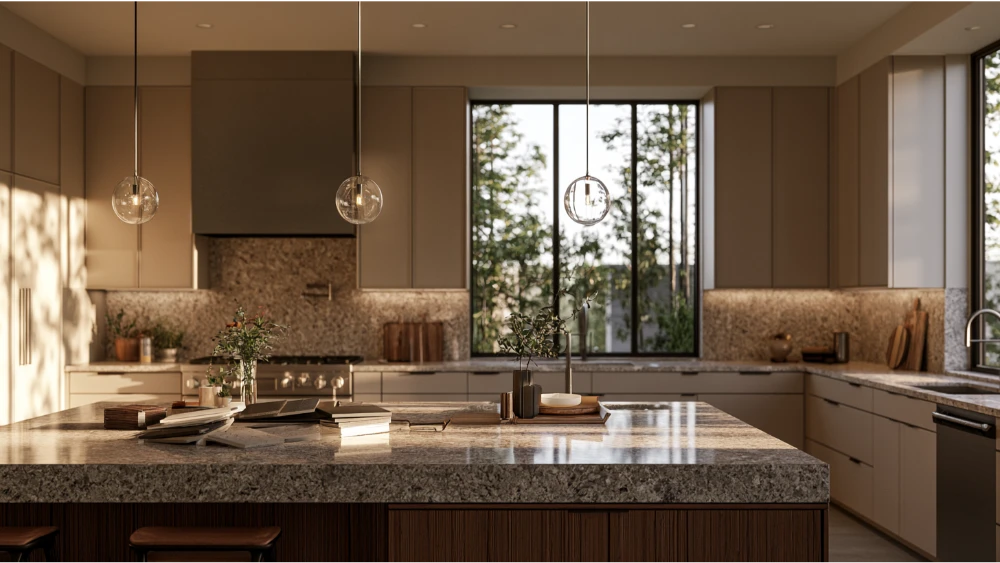
Granite brings natural variation no engineered surface can copy. Every slab is different, it handles heat well, and it holds up to heavy daily use, which makes it a favorite among homeowners who love genuine stone character. It's also a resilient, great option for resale value.
Sealing is where good information matters. The Natural Stone Institute is clear that sealing needs vary by stone and by product, and that sealing makes stone more resistant to stains, not stain proof. Rather than assume a fixed schedule, confirm the right frequency with your stone supplier or sealer manufacturer, since a properly sealed granite counter is far easier to maintain. As for radon, the EPA reports that radon from the soil under a home is a far larger risk than radon from granite, and recommends testing every home regardless of whether it has granite counters.
Quartzite Countertops: Natural Beauty With Strength
Quartzite is not quartz. It's a natural stone, quarried in solid slabs, often with the flowing movement people love in marble. The difference is that quartzite is very hard and heat resistant, so you get much of the look with more everyday durability. It does need sealing, like most natural stone, and it resists scratches well for a natural material.
Its popularity reflects that balance. In the NKBA 2026 Kitchen Trends Report, based on 634 industry respondents, natural quartzite came in right behind quartz at 62% for countertop materials. If you want marble's drama without marble's fragility, quartzite is usually the material we point homeowners toward.
Marble Countertops: Beautiful but High Maintenance
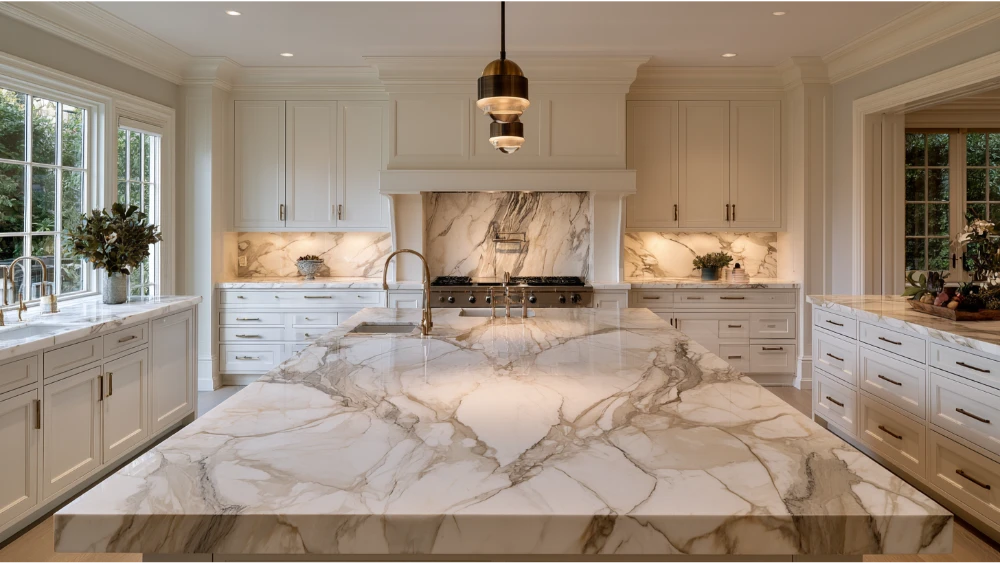
Marble is stunning. The veining and depth are why it keeps showing up in luxury kitchens, and as a natural stone it's genuinely heat resistant. But it's honest to say marble is high maintenance and asks something of you in return.
Marble is a calcareous stone, mostly calcium carbonate, which the Natural Stone Institute notes is sensitive to acids. Lemon juice, vinegar, or tomatoes can etch a polished finish, and it stains more readily than harder stones. It needs regular sealing and will develop a patina over time. For a homeowner who accepts that character as part of the appeal, marble is worth it. For one who wants a worry-free surface, it usually isn't the best choice.
Solid Surface Countertops: Seamless and Repairable
Solid surface countertops are a manufactured acrylic material that's non porous and offers easy maintenance. Their two standout traits are the near-seamless look, where joints nearly disappear, and repairability. Minor scratches and scuffs can often be buffed out, an easy repair that stone can't offer. Solid surface countertops are also stain resistant, so spills wipe away cleanly.
They aren't as heat resistant as stone, so trivets are a must. But for homeowners who value a continuous surface and the ability to refresh it down the road over the feel of natural stone, solid surface countertops are a practical, design-flexible choice at a reasonable cost.
Laminate Countertops: Practical and Design-Flexible
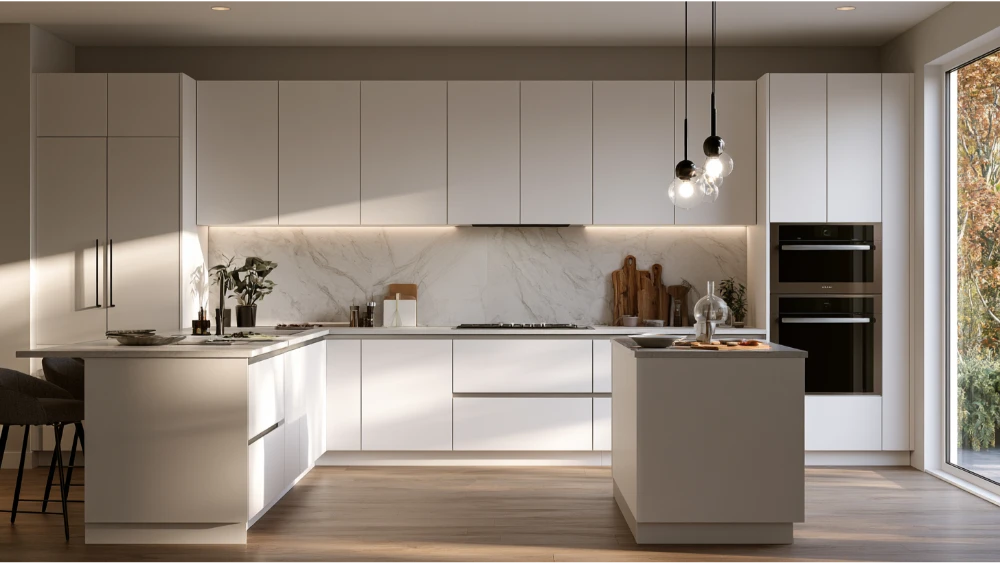
Laminate has come a long way. It's available in a large selection of colors, patterns, and finish levels, it's stain resistant, and it wipes clean with almost no effort. Laminate countertops also keep cost down, so they're the option many homeowners reach for when the budget is tight. For certain projects and design goals, laminate does exactly what's asked of it.
Its limits are worth knowing. Laminate doesn't stand up well to heat, scratches, or standing moisture, and it generally has a shorter lifespan than stone or porcelain. Deep scratches in laminate can't be buffed out the way they can on solid surface. Used thoughtfully in the right space, laminate is a sensible surface that gives you design freedom without the upkeep of natural materials.
Butcher Block, Soapstone, Tile, Aluminum, Concrete, and Eco Friendly Options
Beyond the mainstream options, there are many other types of specialty and eco friendly materials that can define a kitchen or a single island.
Butcher block countertops and wood
Made from strips of wood such as maple, oak, cherry, or walnut, butcher block countertops bring warmth that stone can't. They're a favorite for islands, and among homeowners in the Houzz study who chose a contrasting island surface, 44% went with butcher block or a wood slab. Butcher block countertops must be sealed after installation and require resealing regularly to maintain them, and they can warp or take on stains if neglected.
Soapstone
Soapstone countertops are a quarried stone with a soft, classic feel. Slate countertops share a similar dense, earthy quality if you prefer a matte look. Soapstone is nonporous, doesn't absorb liquids, resists stains, and cleans with mild soap and a sponge. It's softer than granite, so scratches can show, but many owners like the patina it develops with little effort to maintain.
Ceramic tile
Ceramic tile is heat resistant and stands up to water, and glazed tile resists heat and staining. Because tile is set in several pieces, the catch is grout, which collects dirt and needs regular cleaning to maintain. It shines in vintage or handmade styles.
Stainless steel and aluminum countertops
Heat resistant, sanitary, and extremely durable, stainless is a serious-cook surface with a commercial feel. It can scratch and dent, though thicker-gauge steel resists denting better. Aluminum countertops offer a similar metal look, are lightweight and made from recyclable materials, and appeal to homeowners after an industrial, eco friendly finish, though like stainless they show fine scratches over time.
Concrete countertops
Concrete countertops are very durable and hard to chip, with a custom industrial look poured in slabs and shaped on site. Concrete countertops are porous, so they need sealing, and spills should be cleaned quickly with pH-neutral, non-abrasive products to avoid stains. Custom color and shaping can add to the high cost of a specialty pour, but the design freedom is real.
Recycled glass and other eco friendly materials
Recycled materials such as glass, bamboo, aluminum countertops, terrazzo, and paper composite all appeal to homeowners who want sustainable materials whenever possible. Interest is climbing: Houzz reported an 84% year-over-year jump in U.S. searches for "recycled glass countertop." Many of these eco friendly surfaces are stain resistant and easy to maintain. We're glad to source sustainable options where they fit your design.
Countertop Details That Shape the Final Result
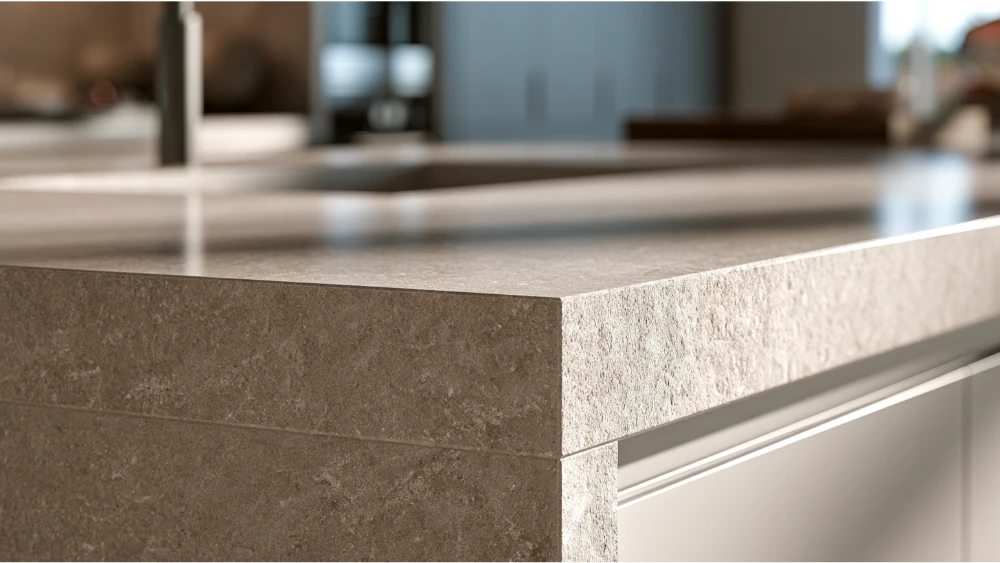
The material is only half the decision. The details are where craftsmanship shows, and they're what many guides skip. They also shape cost, with costs ranging higher as more intricate work adds fabrication time.
- Edge profile: square, eased, bullnose, or mitered edges change the whole feel.
- Slab viewing: for natural stone, see the actual slab before it's cut so you know the movement you're getting.
- Seam placement: where seams fall should be planned, not left to chance.
- Sink and cooktop cutouts: undermount or drop-in, plus precise appliance openings.
- Backsplash: standard height, full slab, or tile changes your material order and adds square foot coverage.
- Island overhang: the Natural Stone Institute references corbel support once a stone overhang exceeds 10 inches, so seating overhangs need real support underneath.
Layout matters too. NKBA planning guidance recommends at least 24 inches of landing area on one side of the sink and 18 inches on the other, plus roughly 12 inches and 15 inches of counter on either side of a cooktop. These factors keep your kitchen comfortable to work in, and we plan them into the design with you.
Why Installation Matters as Much as the Material
Even the finest slab can disappoint if it's installed poorly. Good installation starts with precise templating, moves through careful fabrication, and ends with clean seams and exact cutouts. Natural stone, engineered stone, and specialty surfaces almost always require professional installation to fit, seal, and finish correctly.
There's also a safety dimension homeowners rarely hear about. OSHA and NIOSH treat cutting engineered stone and high-silica natural stone as a respirable crystalline silica concern for workers, with a permissible exposure limit of 50 µg/m³ over an 8-hour period. Recommended controls include wet cutting, water-spraying systems, ventilation, and doing as much work as possible under controlled shop conditions instead of on-site. This affects fabrication, not your use of the counter afterward, and a responsible contractor takes it seriously. When we handle a project, our team protects your home during the work and walks you through the finished result before we call it done.
How to Care for and Maintain Your Countertops After Installation
Most countertop care comes down to a few simple habits that help you maintain any surface, whatever the material
- Use cutting boards instead of slicing directly on the surface to avoid scratches.
- Use trivets and mats even on stone that resists heat, since heat can still affect finishes and sealers.
- Wipe up spills promptly, especially acidic ones on marble or unsealed stone, so they don't leave stains.
- Clean with mild, pH-neutral products rather than harsh or abrasive cleaners.
- Follow the sealing guidance specific to your material to keep it stain-resistant.
For food safety, the CDC recommends washing utensils, cutting boards, and countertops with hot, soapy water after preparing each food item, part of its Clean, Separate, Cook, and Chill steps. A smooth, nonporous surface makes that easy to maintain, which is one more reason cleanability and quality are worth weighing when you choose.
How Oleg & Sons Helps You Choose With Confidence
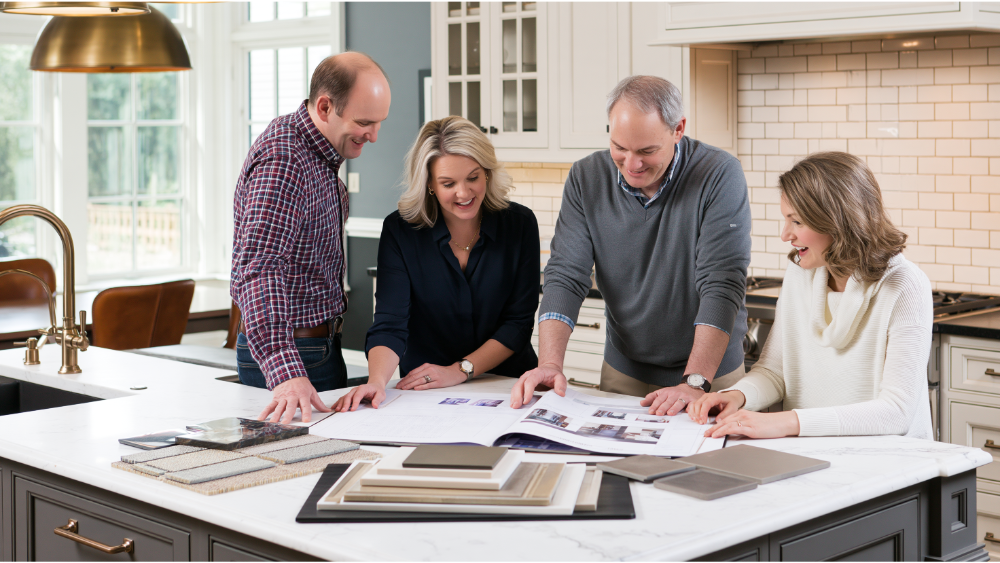
Choosing a countertop shouldn't feel like a gamble. We start with a free consultation to understand how you cook and live, then move into custom design and material selection where we help you compare kitchen countertop types honestly against your priorities, from quartz countertops to butcher block countertops.
We don't hand you a public price list, because accurate cost depends on the material, exact measurements and square foot coverage, edge details, sink and cooktop cutouts, backsplash decisions, demolition scope, and installation complexity. We quote per project so the number reflects your kitchen, not an average. That's how we keep pricing clear and honor what we quote. You also get access to our team throughout construction, with regular updates so you're never left in the dark, and we finish with a final walkthrough plus a full-year warranty on our remodeling work. As a family-owned company with 12 years of experience, we treat your home as if it were our own.

.svg)


.webp)

.webp)