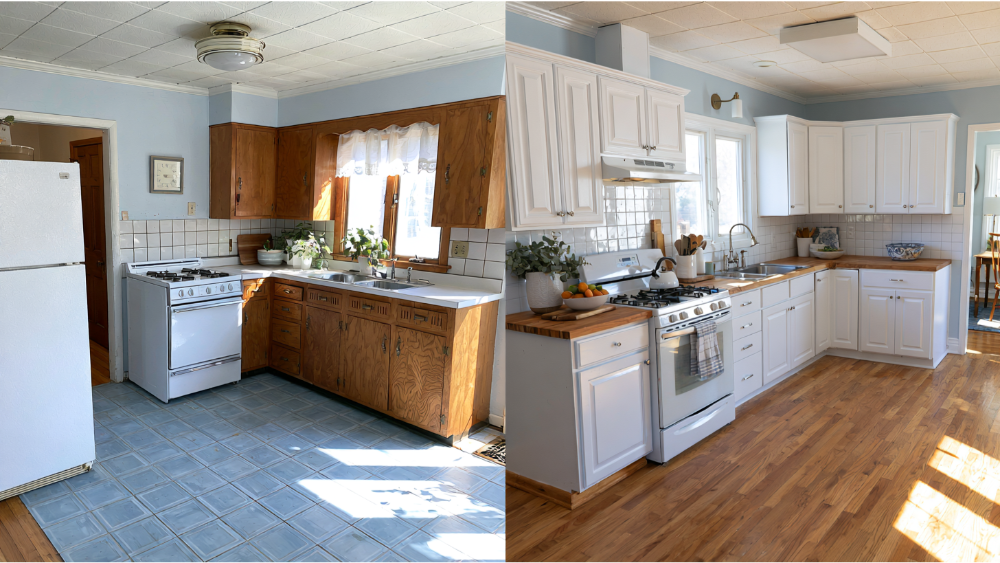


A kitchen remodel is one of the bigger investments you'll make in your home, and it's an emotional one too. You want a space that works beautifully every day, and you want to feel confident the price you're quoted is the price you'll pay. Here's the honest answer: a realistic kitchen remodel cost in Seattle for what to budget in 2026 starts with scope, not a generic number. What you spend depends on whether you keep your existing layout, move plumbing and electrical, remove walls, or upgrade cabinets and appliances. Seattle projects also tend to run above national averages because of local labor and permitting. The safest way to build a budget you can trust is to define your scope clearly, plan for permits and older-home conditions, and get a site-specific quote before any work begins. That's what we'll walk you through here.
Why Seattle Kitchen Remodel Budgets Vary So Much

Two Seattle kitchens the same size can cost wildly different amounts, and that surprises people. A remodel budget isn't one number. It's the sum of your scope, your material costs, local labor, permits, and whatever conditions are hiding behind your walls. When any one of those shifts, the total moves with it. That's why a national calculator or a per square foot average tends to mislead homeowners here. Seattle-area remodels commonly run 15 to 25 percent above national averages, and the reasons are specific to this region.
Seattle Labor Costs and the Regional Skilled Trades Shortage
Skilled labor is one of the largest single factors in a Seattle remodel budget, and the regional skilled trades shortage keeps rates high. Federal wage data backs this up: the Bureau of Labor Statistics reported a mean hourly wage of $44.13 for the Seattle-Tacoma-Bellevue metro in May 2025, compared with a national mean of $33.54. Demand for experienced carpenters, tile setters, electricians, and plumbers stays high across the greater Seattle and Eastside market, and that demand keeps labor costs elevated. Good trades are worth it, but their cost is real and it belongs in your planning from the start.
Older Housing Stock and Hidden Conditions
Seattle and the Eastside have a lot of older housing stock, and older homes hide surprises. Neighborhoods like Queen Anne and Capitol Hill are full of character homes where outdated wiring that doesn't meet current code, aging plumbing, uneven subfloors, and materials that need special handling all add work once demolition begins. None of that shows up in a per square foot estimate. It shows up when the drywall comes down.
Material Choices and Project Scope
Material choice moves the budget more than almost anything else you control. The same cabinet layout can be built in stock, semi custom, or fully custom finishes, and the countertop over it can be a modest laminate or a premium natural stone. We believe quality materials are essential for lasting results, and that's exactly why they carry a range of prices. Your project scope and your finish level, more than your square footage, decide what your kitchen costs.
The First Budget Question: What Kind of Kitchen Remodel Are You Planning?
Before you look at a single price, answer this: what kind of remodel do you actually want? Scope is the biggest lever you control, and it shapes everything downstream. We use four simple tiers to frame the conversation. General industry research shows the cost gaps between them are significant, and small scope decisions carry real savings.
The Kitchen Refresh (Cosmetic Updates)
A refresh keeps your existing layout and existing cabinets, then updates the surfaces you touch and see. Think new countertops, a fresh tile backsplash, paint, hardware, and lighting. Cabinet refacing lives here too, which lets you keep the cabinet boxes and change the look. This is the most budget-friendly path because nothing structural moves.
The Same-Footprint Full Remodel
Here you gut the kitchen but keep the walls, plumbing, and appliance locations where they are. New cabinets, new counters, new flooring, new appliances, but the footprint stays put. This mid range remodel keeps plumbing in place as a genuine savings lever, often in the range of $1,500 to $3,000 by general market estimates, because you avoid relocating supply and drain lines.
The Layout-Changing Remodel
Now you're moving things: relocating the sink, shifting the range, adding an island with utilities, or repositioning cabinet runs. These layout changes and layout improvements mean every relocation of plumbing or electrical triggers permits and inspections, and the labor climbs accordingly. This is where budgets start to widen quickly.
The Structural or Custom Remodel
Wall removal to open the kitchen, adding square footage, or building a fully custom design puts you at the top of the range as a major kitchen remodel. Structural changes and structural modifications mean engineering, permits, and coordination across multiple trades. Any structural work delivers the most dramatic transformation and carries the most complexity to plan for.
The Biggest Cost Drivers in a Seattle Kitchen Remodel

When homeowners ask us what drives cost, the answer is fairly consistent. Cabinetry and skilled labor are almost always the two largest line items on a kitchen remodel, with industry research placing cabinets alone at roughly 25 to 35 percent of a full project. After that, the biggest swings come from your countertop and appliance choices and from anything that moves plumbing, electrical systems, or walls. Understanding these drivers up front is how you keep your budget honest.
Cabinet Costs: Stock, Semi Custom Cabinets, and Custom Cabinets
Cabinetry is where craftsmanship shows, and it's usually your single biggest expense. There's a clear ladder from stock to custom. Stock cabinets are pre-sized and the most affordable, with general market pricing around $80 to $200 per linear foot. Semi custom cabinets add sizing and finish flexibility, roughly $150 to $400 per linear foot, and semi custom cabinetry typically runs 30 to 40 percent less than full custom. Custom cabinets and millwork are built to your exact space and vision, which is where fine detail and lasting quality live. Cabinet costs vary widely, so it helps to decide early whether stock, semi custom, or custom fits your goals.
If your existing cabinets are solid boxes, refacing is worth a look. General estimates put cabinet refacing around $6,000 to $14,000 versus $15,000 to $35,000 for full replacement. We believe quality materials produce results that last, and custom cabinetry is exactly where that investment pays off day after day.
Countertop Material: Comparing Options by Cost and Durability
Your countertop material balances budget, durability, and the look you want. Here's how common options for new countertops compare, using general market research for installed pricing. Quartz countertops, granite countertops, and other stone countertops each behave differently over time.
MaterialTypical installed rangeMaintenance noteQuartz$55 to $120 / sq ftLow maintenance, no sealingGraniteVaries by slabSeal every 1 to 2 yearsMarble$75 to $200 / sq ftSofter, stains and etchesPorcelain slab$80 to $150 / sq ftVery durable, heat resistantButcher block$35 to $70 / sq ftWarm look, needs oiling
The right choice depends on how you use your kitchen. A busy family kitchen and a low-traffic second home call for different answers, and we help you weigh durability against the finish you love. Natural stone brings a look many homeowners want, while engineered surfaces lean toward lower upkeep.
Appliances, Ventilation, and the Appliance Package
Your appliance package can swing the budget more than people expect. Modern appliances range from standard modern appliances to professional grade appliances, and those suites sit far apart in price. Deferring upgrades can save roughly $6,000 to $12,000 by general estimates if you're not ready to invest at the high end. Energy efficient appliances and smart appliances add features and cost, and panel ready appliances that blend into cabinetry carry their own premium. Ventilation deserves real attention in Pacific Northwest kitchens too. Proper range hood exhaust manages moisture and cooking humidity, which protects your finishes and keeps the space comfortable. It's a functional detail that's easy to overlook and costly to fix later.
Plumbing Relocation, Gas, Electrical Upgrades, and Wall Removal
These are the multipliers. Plumbing relocation, moving gas lines, electrical upgrades to outdated wiring, or removing a wall all push a project from cosmetic into structural and permitted territory. In Seattle, moving plumbing or electrical requires a permit, and structural changes do too. Each one adds inspections and coordination on top of the installation labor itself. Keeping plumbing where it already sits is a real savings lever, and it's one reason we talk through layout carefully before anyone commits. If your existing footprint works well, you can put more of your budget toward finishes instead of relocation. When a change genuinely improves how you live in the space, though, it's worth planning for properly rather than discovering the cost mid-project.
Does Cost Per Square Foot Actually Tell You Anything?
Not much, honestly. Cost per square foot is a tidy-sounding number that falls apart in a kitchen. Kitchens are the densest, most system-heavy room in the house, packed with cabinetry, plumbing, gas, electrical, and appliances in a small area. A national average smooths over all the choices that actually decide your total. Two identical-sized kitchens can differ dramatically based on finish level and scope alone, and Seattle's 15 to 25 percent premium over national averages widens the gap further. The average kitchen remodel cost you read online rarely matches your real numbers. Build your budget around scope and material decisions instead. That's the approach that holds up when the quotes come in.
Kitchen Remodel Cost in Seattle: Permit Basics Homeowners Should Know

Permits protect you, and skipping them creates real risk. They're a set of fixed expenses that belong in your cost breakdown from the start. If you're remodeling inside Seattle city limits, the Seattle Department of Construction and Inspections (SDCI) handles building permits, and one thing worth knowing for 2026: Washington's 2021 codes remain in effect. The 2024 codes have an effective date of May 3, 2027, per the Washington State Building Code Council, so your remodel should be planned against current 2021 code, not the newer edition. Bellevue and other Eastside homeowners work with their own city or county building departments, so SDCI specifics apply within Seattle itself.
Do You Need a Permit for a Kitchen Remodel in Seattle?
It depends on the work. SDCI notes that most projects require a permit, though some minor cosmetic work does not, and installing cabinets is listed among work that usually doesn't need one. But the moment you touch structural elements, load-bearing supports, ventilation, or move plumbing and electrical, a permit is required. Even permit-exempt work still has to meet code. Building without a required permit can bring a stop-work order and fines of up to $500 per day, so this isn't a corner worth cutting.
SDCI Construction Permits vs. Subject-to-Field-Inspection
Larger remodels typically need an addition or alteration permit, where fees are based on project value and roughly 75 percent of the fee is due at intake. Permit costs scale with the size of the job. SDCI targets initial review of 2 to 3 weeks for simple permits and up to 8 weeks for complex ones. Smaller qualifying projects may use a subject-to-field-inspection (STFI) permit, whose screening process takes just a few days. Issued permits stay valid for 18 months, and single-family projects need a final approved inspection to close out.
Electrical, Plumbing, and Gas Permits
These are separate from your construction permit. Seattle requires an electrical permit any time wiring is installed, altered, or extended, and most electrical permits need three inspections: cover, service, and final. Plumbing and gas piping run through a different authority entirely. Public Health – Seattle & King County handles plumbing and gas permits within Seattle and unincorporated King County whenever those systems are installed, relocated, or changed. Knowing which permit lives with which agency keeps your timeline from stalling.
Who Should Pull the Permit, You or Your Contractor?
In most cases, your contractor should. Washington's Department of Labor & Industries (L&I) flags it as a warning sign if a contractor asks you to pull the building permit yourself, because in most instances the contractor is required to take out permits when hired. A registered contractor handling permits keeps accountability where it belongs. We manage the permit process as part of the job, so you're not left navigating agencies on your own.
Older Seattle Homes: Hidden Costs That Change Your Budget
Seattle and the Eastside are full of seattle homes with decades of history, and that history can reshape a budget once work begins. This is why we recommend building a contingency of 10 to 20 percent into any older-home remodel to absorb hidden costs. It's not pessimism. It's planning for what's genuinely common in seattle kitchens.
Lead paint is a real consideration in pre-1978 homes. The Washington State Department of Commerce requires RRP certification for renovation, repair, or painting work on those homes, and EPA thresholds trigger lead-safe work practices once a project disturbs more than 6 square feet of interior painted surface or 20 square feet of exterior. Asbestos is another. Before renovation, an asbestos survey may be needed, though the Puget Sound Clean Air Agency allows a homeowner to self-survey an owner-occupied single-family home being remodeled rather than demolished. Beyond those, older kitchens routinely reveal outdated wiring that needs replacing, aging plumbing, and uneven or damaged subfloors.
The way a good contractor prevents surprise costs is by identifying these risks before demolition, not after. We look for them early, talk them through with you honestly, and fold what we find into the plan so the budget reflects reality from the start.
How to Avoid Surprise Costs on Your Kitchen Remodel

This is the part that matters most to homeowners who've been burned before, and it's where we've built our reputation. Surprise costs almost always trace back to unclear scope or decisions made too late. You can prevent most of them with a disciplined front end, keeping your upfront costs clear and your project costs predictable. Here's how we approach it, and what you can insist on from any contractor you hire.
- Finalize your layout before construction begins. Layout changes mid-project are the most expensive kind. Lock it in first.
- Select materials early. Choosing cabinets, counters, tile, and plumbing fixtures up front lets everything be priced accurately and ordered ahead of lead times.
- Understand your allowances. An allowance is a placeholder dollar amount for an item you haven't picked yet. Know what each one covers so you're not surprised when you upgrade.
- Ask what's included and excluded. Demolition, disposal, permits, design fees, and finish carpentry should all be spelled out, not assumed.
- Confirm who pulls permits. This should be your contractor. Get it in writing.
- Identify older-home risks before demo. Lead, asbestos, wiring, and subfloor conditions are cheaper to plan for than to discover.
- Put change-order rules in writing. Agree on how any change is documented, priced, and approved before it happens.
- Build a contingency. Especially in older homes, that 10 to 20 percent buffer keeps a surprise from becoming a crisis.
Communication is the foundation of all of this. Our clients are never left in the dark, and that's a deliberate choice, not an extra. Customers have described our work as coming with no change orders, and that comes from clear scope and steady communication, not luck. When you know what's happening at every stage, surprises have nowhere to hide.
How to Compare Kitchen Remodel Quotes Without Getting Burned
The lowest number on a bid isn't the same as the best value, and comparing quotes by total project cost alone is how people get hurt. Two bids for the same kitchen can differ because one includes more work. L&I's own homeowner guidance says to get bids in writing and evaluate scope, warranties, references, and completion dates rather than focusing only on price. Two quotes that look far apart may simply define the work differently. Line them up on the same terms before you decide.
- Scope of work: Does each bid cover the same tasks, or is one assuming less?
- Cabinet type and finish level: Stock, semi custom, or custom changes everything.
- Countertop material and appliance assumptions: Are they pricing the same tier you actually want?
- Electrical, plumbing, and gas scope: Relocations should be clearly stated.
- Demolition and disposal: Confirm it's included.
- Permits and inspections: Who handles them, and are fees in the bid?
- Timeline and warranty: A clear completion window and a real warranty matter.
- Change-order process: How changes get priced and approved.
Verify the basics too. L&I requires every construction contractor to be registered, bonded, and insured before they can bid or perform work, with bond amounts of $30,000 for general contractors and $15,000 for specialty contractors. It's also worth knowing that unpaid subcontractors or suppliers can file a construction lien within 90 days of work stoppage, which is another reason to hire a contractor who pays their people and communicates clearly.
Is a Kitchen Remodel Worth It for Resale Value in Seattle?

Start with how you live, then consider resale value. A kitchen you love using every day is worth a great deal that no report can measure. That said, the numbers are encouraging for the right scope. The 2025 Cost vs. Value Report shows a Seattle minor midrange kitchen remodel recouped 118.1 percent of its cost, meaning a well-planned refresh can more than pay for itself at resale. Larger projects recoup less: 53.1 percent for a mid range full remodel and 38.7 percent for a major upscale one. Mid range projects tend to strike a strong balance between cost and return. That doesn't mean big remodels aren't worth doing. It means resale shouldn't be the only reason you do them. If you're staying put, invest in the function and finishes you'll enjoy. If you're planning to sell soon, a targeted, quality refresh often returns the most, and even the same kitchen updated thoughtfully can shift how a home shows.
How We Help You Plan With Clarity
At Oleg & Sons, we understand that your home reflects your style and values, and a seattle kitchen remodel is a significant investment both financially and emotionally. With 12 years of experience and a two-year warranty on our remodeling services, we've built our process around removing the guesswork that stresses seattle homeowners out. It runs in five steps.
It begins with a free consultation and planning, where we listen to your vision and talk through scope, budget realities, and any older-home conditions to watch for. Next comes custom design and material selection, where we help you choose quality materials that deliver lasting results and select sustainable options whenever possible. Then our craftsmen handle professional construction with meticulous attention to detail, keeping you updated the whole way so you're never in the dark. Before we call it done, we walk through the finished kitchen together for final walkthrough and approval, because we won't consider the job complete until you're satisfied. And our commitment continues with post-project support after handoff.
Transparent pricing and open communication run through all of it. We're an owner-led, family-owned firm, which means personal accountability on every kitchen remodel in Seattle, not a faceless crew you never meet.


.svg)










.webp)

.webp)


.webp)