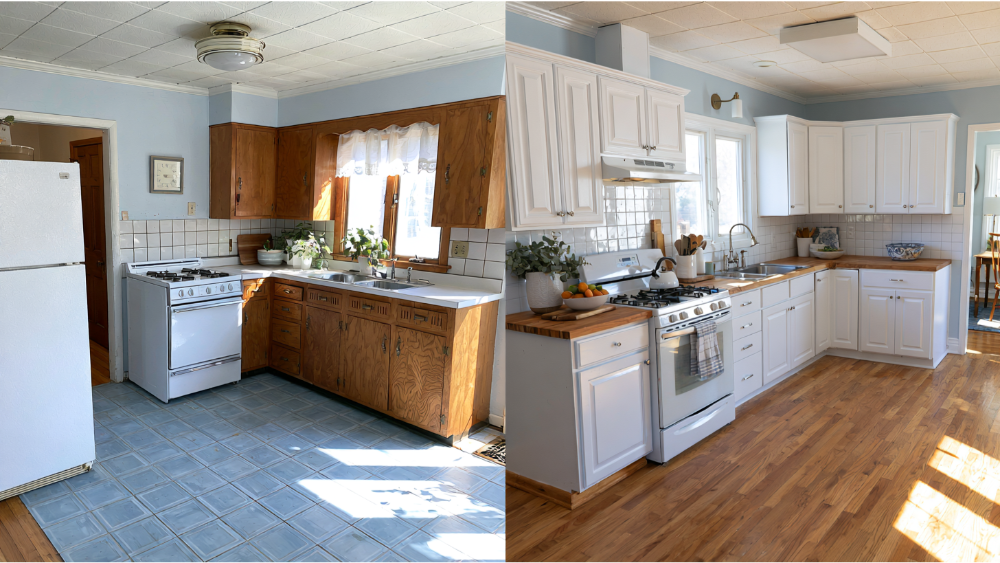


A home reno company turns your vision into a clearly defined scope of work, then coordinates the design, materials, permits, inspections, and skilled trades needed to build it. The best home renovation contractors stay accountable past the last coat of paint, closing out completed projects with a final walkthrough, a written warranty, and someone you can still call six months later. You're putting real money into your house and living with real disruption, and you've probably heard a horror story or two from friends or neighbors. So here's a stage-by-stage look at what a renovation company should handle, and what you should have in writing before anyone swings a hammer.
What Is a Home Renovation Company, and What Services Does It Offer?

A home renovation company plans and builds improvements to an existing home, from a single room to the whole property. Typical renovation services include kitchen remodeling (layout optimization, cabinetry, countertops, finishes), bathroom remodeling (fixtures, tile, and sometimes the expansion of a cramped bathroom), and whole-home renovation projects that reshape how an entire living space works. Supporting services come along with most of that work: tile, millwork, flooring installation, painting, drywall, insulation.
The title itself isn't standardized. Two companies can both call themselves a renovation company and own very different amounts of the entire project, which is why the real question is never the name on the truck. It's which company is responsible for each aspect of the job, and whether that responsibility is written down.
Renovation vs. Remodel, What's the Difference?
Renovation refreshes and restores what already exists: new finishes, fixtures, surfaces, cabinetry. The bones of the space stay put. You can redo every visible surface in a room and still leave the structure untouched.
Remodel changes the layout, structure, or function: moving a wall, relocating plumbing, expansion of a footprint.
The difference matters because a remodel almost always pulls in permits, inspections, possible structural review, and heavier trade coordination. A renovation that sounds cosmetic at the kitchen table crosses that line the moment you decide the sink should move. Many home renovation projects sit in both categories at once, which is why scope has to be defined before anyone prices it.
Do You Need a Specialist, a General Contractor, or a One Stop Shop?

Specialty contractors: one trade or a narrow set of skills. Tile, painting, flooring. Ideal when you know exactly what you want and it's a single job.
General contractors: manage construction across multiple trades, schedule the work, handle permits and inspections.
Design-build (one stop shop): companies that offer design and construction under one contract, so one entity owns the outcome rather than two parties pointing at each other. The Design-Build Institute of America describes this as a single point of contractual responsibility, and in practice it means less time spent refereeing between a designer and a builder.
The more trades and decisions your renovation touches, the more value there is in one accountable point of contact.
What Do Full-Service Home Renovation Services Include, From Start to Finish?
Most renovation projects move through a five-stage process. At each stage, you should know what the company handles, what you receive in writing, and how you'll be kept informed through the entire process.
1. Consultation and Planning
Good planning starts with listening, not measuring. We want to hear what isn't working in the space, what you can't compromise on, and what constraints and concerns you're living with. From there, goals and scope get written down, likely permit and design needs get flagged early rather than discovered mid-project, and you learn who your point of contact is and how decisions get approved. Many things get decided cheaply on paper here instead of expensively on site later. We offer a free consultation for exactly that conversation, before anyone asks you to commit.
2. Custom Design and Material Selection
Design should follow how you actually use the room and reflect your style, not a catalog's. A layout that photographs well can fight you every morning, so we tailor the plan to your household rather than reusing a template. Quality materials matter here because cheap materials undermine even careful craftsmanship, and lasting results depend on both. Selections, fixtures, and allowances belong in writing so the proposal reflects your real choices. We prioritize sustainable materials and practices whenever possible.
3. Professional Construction
This stage is coordination, and it's where the plan comes to life. It's also where a contractor's expertise shows. Skilled craftsmen and licensed trades (plumbers, electricians, tile setters) have to land in the right order against a schedule that holds. Permits are pulled and inspections scheduled by the company, not handed off to you. You should get regular progress updates so you're never in the dark about your own house. Respect for an occupied home is the aspect homeowners feel daily: dust control, floor and furniture protection, agreed work hours, cleanup, debris removal. Any change gets documented and approved before work proceeds.
4. Final Walkthrough and Approval
Walk the completed space together, proposal in hand, and compare what was promised to what was built. Confirm that the fixtures and finishes installed are the ones you selected. A punch list captures anything outstanding, and those items get completed rather than forgotten. Inspection signoffs are confirmed where applicable. Test functions, not just appearances: drawer alignment, door swing, shower drainage, lighting, bathroom ventilation. This is the stage where meticulous attention to detail either shows or doesn't. We won't consider the job done until you're completely satisfied with your remodel.
5. Warranty and Post-Project Support
Closeout should leave you with paperwork, not just a clean floor. That means written warranty documentation, care guidance for your new finishes, a named contact who remains reachable after handoff, and final documents including lien releases. A one-year workmanship warranty is a common industry baseline, and we back all of our remodeling services with a full-year warranty. Our relationship with customers doesn't end at the last payment.
Why Do Renovation Costs Vary So Much Between Companies?

Renovation costs swing widely because scope swings widely. The drivers are consistent: how completely the project was defined before pricing, the age, condition, and repair history of the house, what turns up behind the walls, whether layout or structure changes, the permit rules that apply at your location, the finish level, and how many decisions are still undecided at signing.
The reality is that two proposals usually differ because they assume different projects, not because one company decided to be generous. It also costs more to renovate a 1960s house with original plumbing than a well-kept newer one. That's why we quote each renovation individually after seeing the location, rather than publishing numbers that couldn't apply to your home.
Seven Proof Points to Check Before You Hire
- Relevant expertise with your project type. Ask how many comparable projects they've completed. A company whose recent work is mostly decks, for example, isn't the same fit for a kitchen remodel with relocated plumbing.
- Verified registration and coverage. Confirm active contractor registration, liability insurance, and workers' compensation. Ask to see the policy instead of trusting website copy.
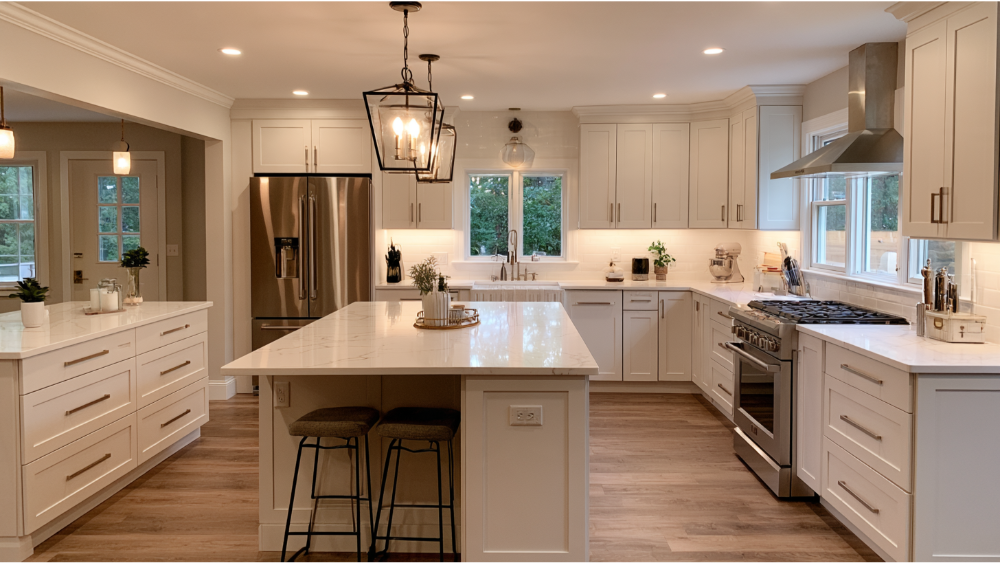
- A real before-and-after portfolio. You should be able to browse completed projects, not stock images. Ours is on our gallery page, including a full house renovation in Bellevue.
- Recent references and reviews. Ask past customers whether their renovation finished on schedule and on the agreed scope. Our site lists a 5.0 Google rating from 43 reviews.
- A detailed written scope and contract. Vague documents create arguments later.
- A defined communication process. Named contact, update frequency, and how selections get approved.
- Warranty and support. Know what's covered, what post-project support they offer, and who you call.
Reputation signals like a Better Business Bureau profile or NAHB and NARI membership are helpful context, but they don't replace independent verification of the contractors you're considering.
How Do You Compare Home Renovation Proposals Fairly?

Washington's Department of Labor & Industries recommends getting three written bids. That only helps if you normalize the scopes first, because three companies assuming different materials, permit responsibilities, and exclusions are not producing comparable documents. Compare every aspect side by side. Ultimately you're choosing a process and a team, not just a number.
How Should Changes and Unexpected Conditions Be Handled?
Changes come from two places. Either you decide you'd rather have the taller cabinets, or the wall opens and reveals old plumbing nobody could see. Both are legitimate. Neither should ever be a surprise on an invoice.
You should get a written explanation and give approval before extra work proceeds, and you should hear the schedule impact alongside the cost impact. Our process is thorough scoping upfront and clear pricing, which is why clients have described projects that ran without change orders. That's our track record and our commitment, not a claim that no legitimate condition can ever arise in an older house.
What Should Washington Homeowners Verify Before Work Starts?

- Use L&I's Verify tool to confirm active registration, bond, liability insurance, workers' compensation, citations, and lawsuits against the bond. L&I notes plainly that hiring a registered contractor doesn't guarantee a problem-free project.
- Know the floors: a $30,000 bond for general contractors, $15,000 for specialty contractors, and liability coverage of either $200,000 public liability plus $50,000 property damage or $250,000 combined single limit. Minimums, not full protection.
- Contractors must include their registration number in advertising, estimates, and bid proposals. Look it up and confirm the registered business matches the one bidding.
- Covered residential projects priced at $1,000 or more require a statutory disclosure statement before work begins.
- Liens can generally be recorded within 90 days after work ends, so request lien releases from major subcontractors and suppliers before final payment.
- The Homeowner Recovery Fund may pay up to $25,000 after a qualifying court judgment. Treat it as a backstop, not a substitute for vetting.
Do Bellevue Kitchen and Bathroom Projects Need Permits?
Permit rules depend on your location and on what you're actually touching. Per the City of Bellevue, replacing cabinets or countertops doesn't require a building permit on its own, though plumbing or electrical permits may apply. Installing or moving a fixture that changes water lines, drains, or vents does require one. Showers and bathtubs require permits, so most bathroom remodels that touch plumbing will need them. Structural work such as removing a load-bearing wall, or an expansion of floor area, needs a remodel permit with plan review.
Qualifying nonstructural single-family remodels may use Bellevue's no-plan-review permit path, with inspections still required. Washington's 2021 code editions took effect March 15, 2024. For homes built before 1978, EPA's Renovation, Repair and Painting Rule requires certified firms and lead-safe practices, with minor-repair thresholds of 6 square feet indoors per room and 20 square feet outdoors. Window replacement and demolition of painted surfaces are covered regardless.
Red Flags When Screening Home Renovation Contractors

- Registration you can't independently verify
- A verbal-only or vague scope of work
- Unclear answers about who pulls permits
- No comparable portfolio of completed projects, and no references
- Pressure to sign on the spot
- An unusually low number with no explanation of what was excluded
- Cash-only demands or a large payment requested upfront
- No written process for changes and no named point of contact
- No warranty or closeout plan
If a contract was signed in your home, the FTC's Cooling-Off Rule may give you until midnight of the third business day to cancel. It doesn't apply to every agreement, so read yours.
Why Owner-Led Accountability Matters When You Hire Local Professionals
Homeowners sometimes wonder whether a family-owned team can handle a significant renovation. The better question is who answers for the outcome. With an owner-led company, the person who sat at your table and heard your vision is still involved when the tile goes down. Fewer handoffs, shorter decision paths, real continuity from consultation through walkthrough. That continuity is what gives homeowners confidence during the messy middle of a project. Our site states 12 years of experience, and our craftsmen treat your home as they'd treat their own. Working near your location helps in practical ways too: we know King County and Snohomish County permitting, the inspectors, and what older homes in a given neighborhood tend to hide behind their walls.
Let's Start Planning Together

Oleg & Sons is a family-owned, owner-led remodeling company at 14205 SE 36th Street, Suite 100, Bellevue, WA 98006, serving King County and Snohomish County including Seattle, Sammamish, and Everett. We offer kitchen remodeling, bathroom remodeling, and whole-home renovation and design services, built on quality materials, open communication, a full-year warranty, and post-project support. Browse our before-and-after gallery to see completed projects, then get in touch for a free consultation and take the first step toward transforming your home.


.svg)

















.webp)



.webp)



.webp)