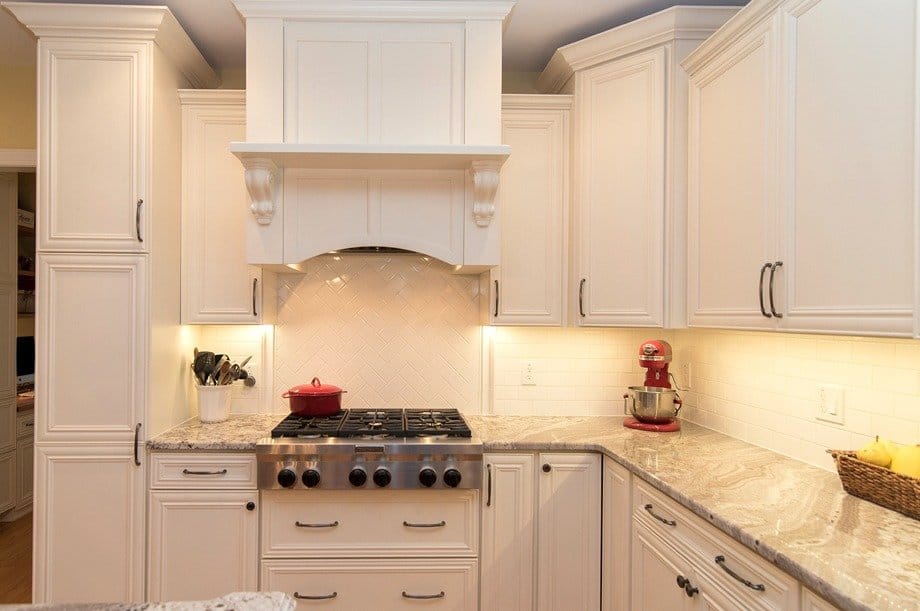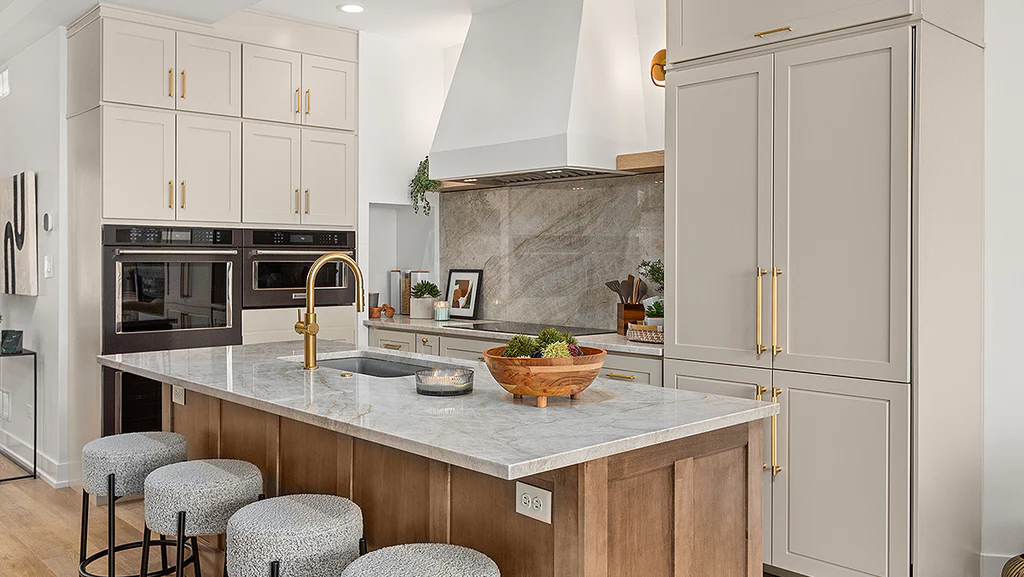

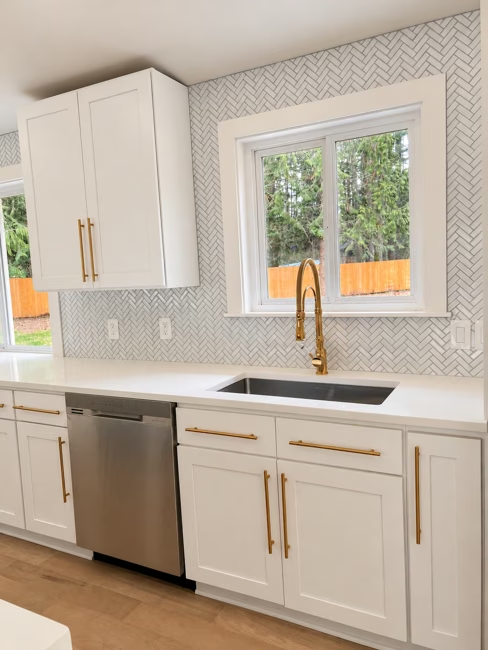
Completed kitchen sink area · Woodinville, WA
A kitchen backsplash is the wall finish around counters, sinks and cooking areas that helps handle everyday splashes and gives the kitchen a more complete appearance. Backsplash materials range from individual tile to larger panels. The right choice depends on the look you want, the product’s suitability and how its edges, openings and transitions will be installed.
Begin with the counter and cabinet palette
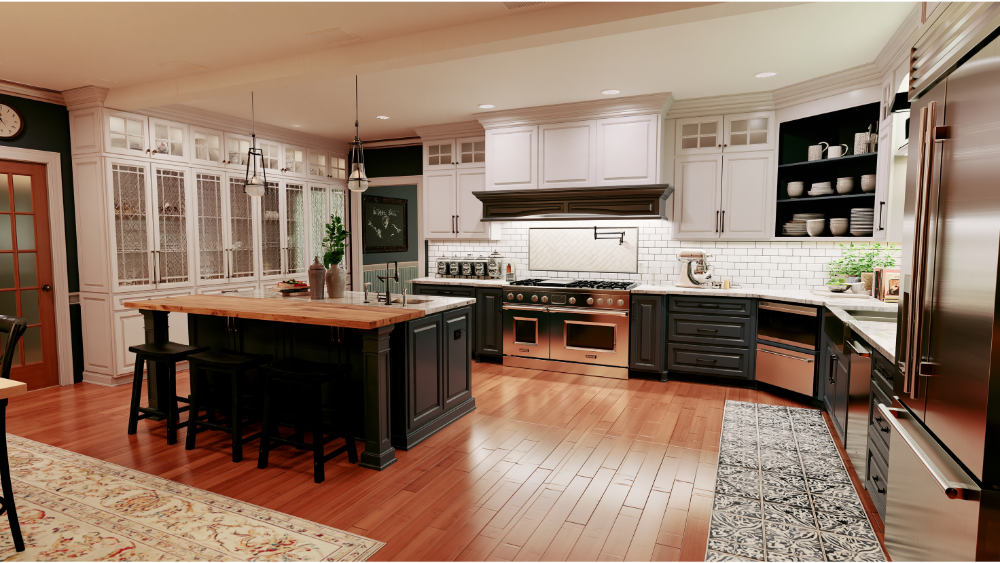
Compare the backsplash sample beside the actual cabinet finish, counter and hardware. Look at it in the room’s daylight and under the planned task lighting. A small patterned tile, a quiet field tile and a strongly veined panel create different focal points.
Decide whether the backsplash should be the visual feature or a background for other elements. Repeating the same color in several finishes does not guarantee they will look the same under different light.
Compare tile, glass, stone and panel products
Ceramic or porcelain tile offers many formats and patterns. Glass, natural stone and larger-format panels introduce different appearance, fabrication and care questions. Confirm that the selected product is suitable for its intended wall location and exposure.
Ask for the specific material and product information rather than treating every tile or slab as interchangeable. Review the manufacturer’s guidance for the location around the cooking equipment and the required clearances.
Plan the layout before setting the first piece
Identify the starting point, pattern, grout appearance, exposed edges and the way the finish ends at cabinets, windows or adjacent walls. Show outlets, switches and other penetrations on the drawing.
A backsplash can look very different when an attractive sample is repeated across the whole wall. A layout review helps you see small cuts, strong pattern changes and how the finish meets the counter and range area.
Include preparation, fabrication and transitions
Confirm the condition of the wall and which preparation is included. Larger panels may require templating or fabrication, while a detailed tile pattern creates its own setting and finishing work. Compare those installed scopes alongside the material price.
Discuss access behind wall-mounted fixtures and the order of cabinet, counter and backsplash work. Keep the approved products and the installation responsibilities in the same project documents.
Use real project details to refine the decision
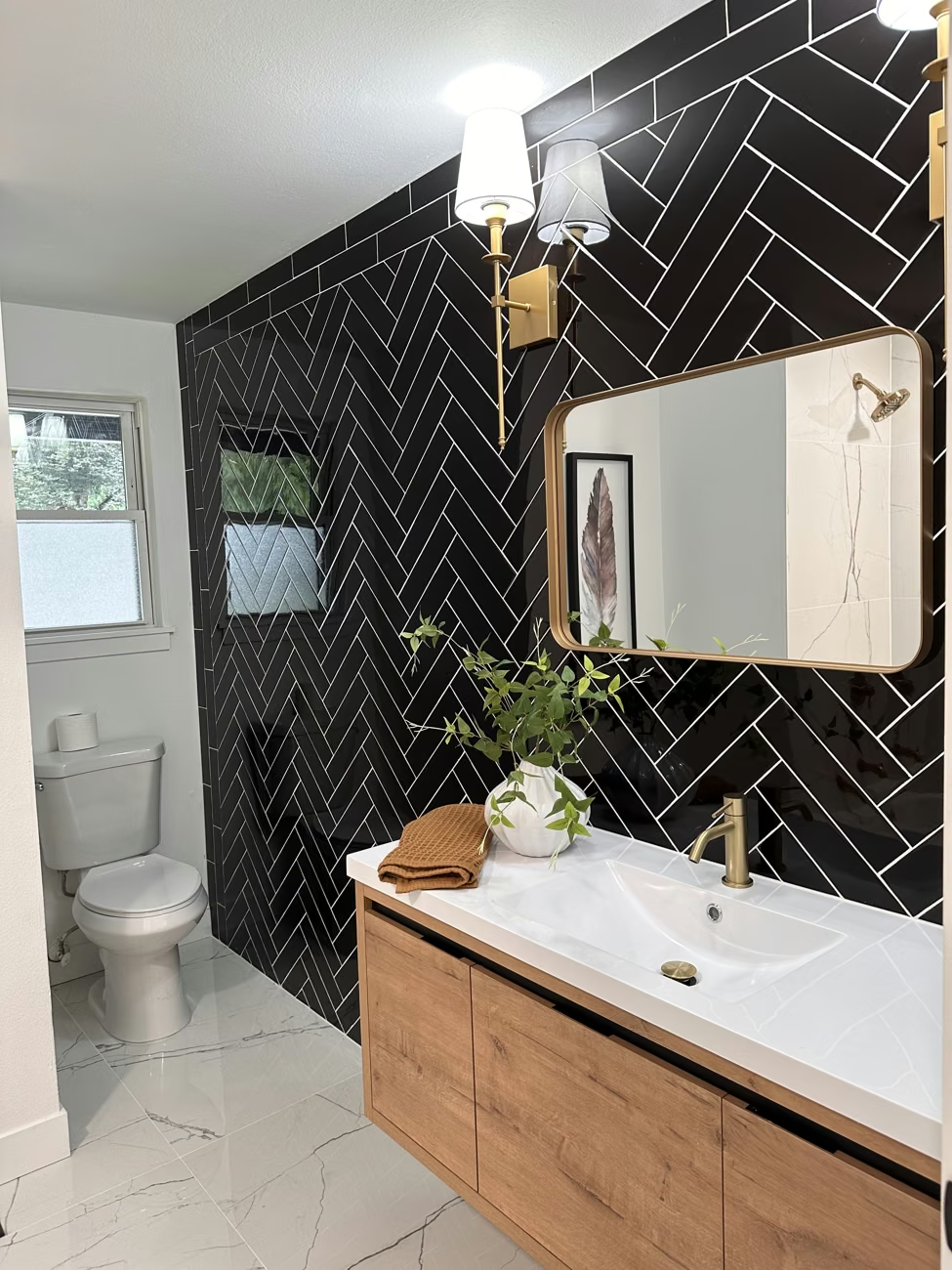
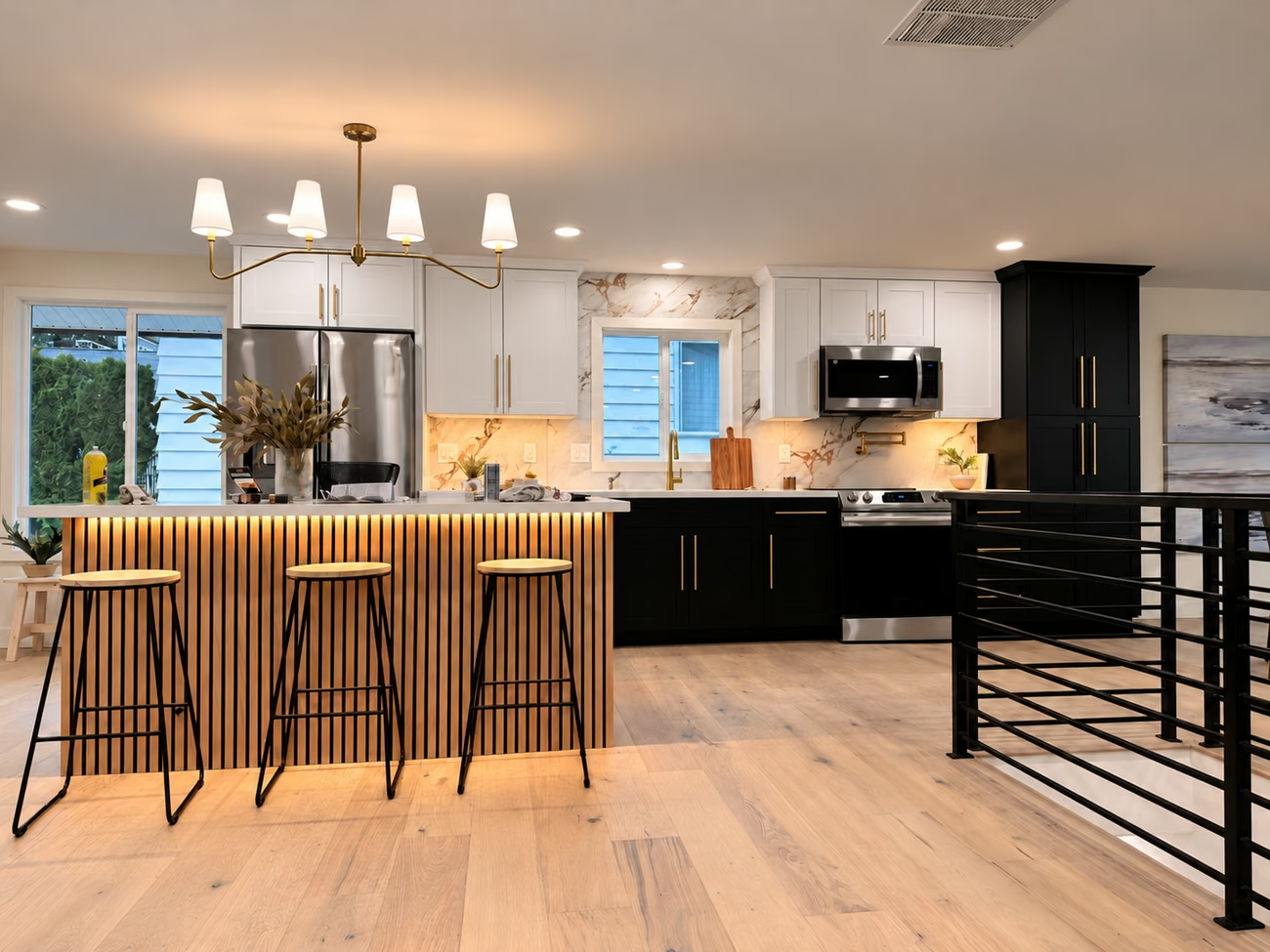
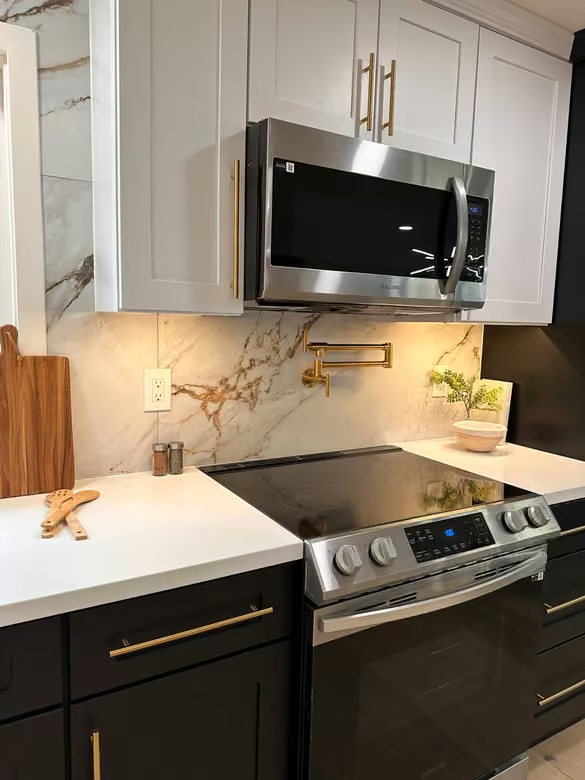
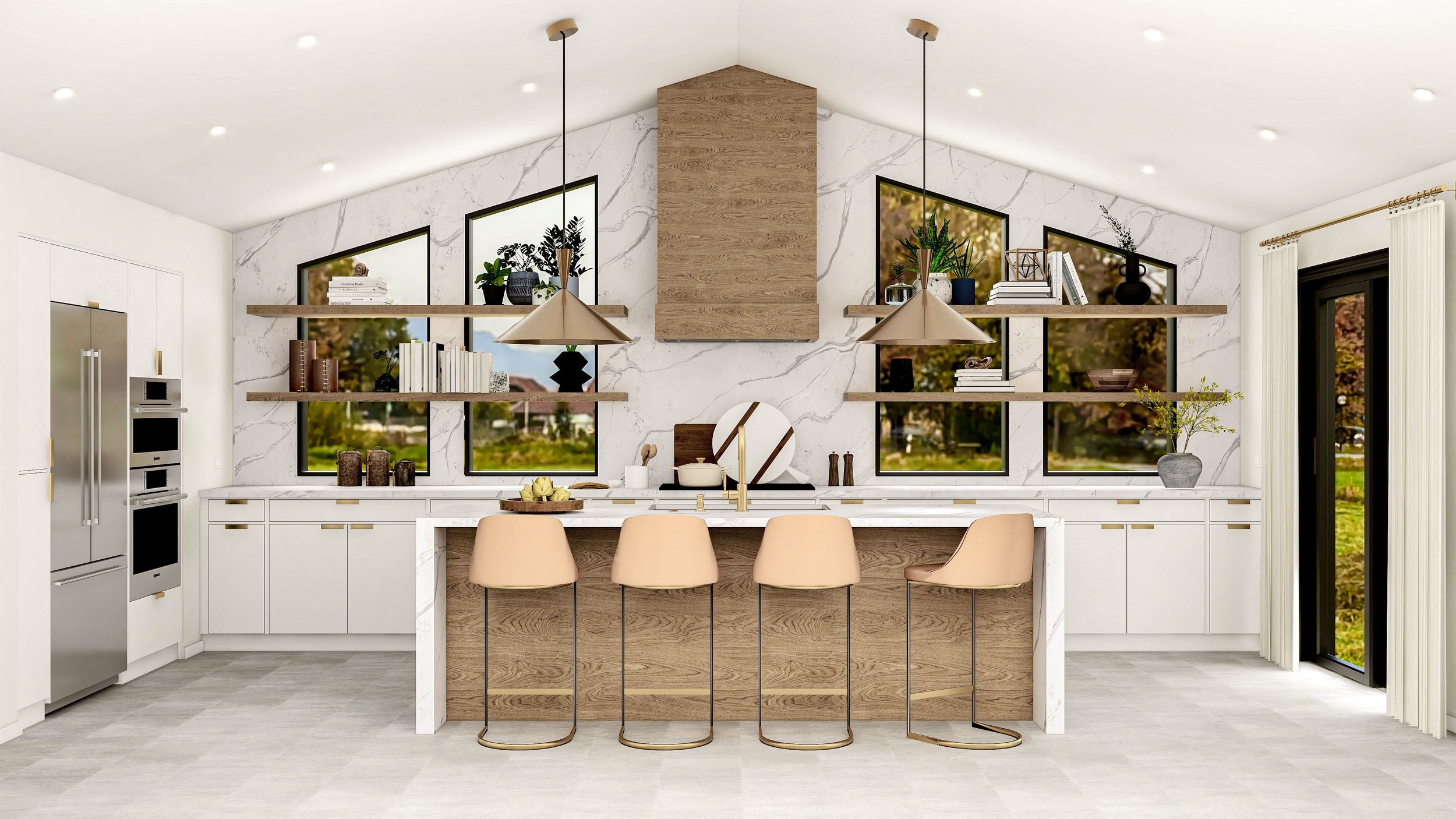
Our Woodinville kitchen uses a herringbone-pattern backsplash around the sink wall, while the Edmonds kitchen shows a light, veined backsplash beside contrasting cabinets and warm hardware. They provide different ways to connect the working wall with the rest of the kitchen.
Use the photographs to point out a feature you like, then review suitable samples for your home. A portfolio photograph identifies a design direction; the final product and its technical requirements are confirmed separately.
Think about cleaning as part of the design
Review the selected material’s care instructions, the number and appearance of joints and the access around fixtures or appliances. Consider where cooking splashes and daily cleanup are most frequent.
A finish that works for the household should be understandable to maintain. Keep the product’s care information with the project handover details and use the approved cleaning method for that material.
Plan the next step for your home
Bring your room photographs, priorities and any existing plans to a free 30-minute in-home consultation with Oleg & Sons Bellevue Home Remodeling. We can discuss the scope and the next planning steps for your home. Product, professional and construction responsibilities are confirmed in the written proposal.
Sources and further reading
Use the current product or authority information for your selected materials and property.